

 English
 中文简体
中文简体Content
- 1 What Is DINP (Diisononyl Phthalate)?
- 2 How DINP Works as a Plasticizer in PVC
- 3 Primary Industrial Applications of Diisononyl Phthalate
- 4 DINP vs. DEHP and Other Plasticizers: Key Differences
- 5 Regulatory Status of DINP Around the World
- 6 Safety and Toxicology: What the Science Says About DINP
- 7 Environmental Fate and Ecotoxicology of Diisononyl Phthalate
- 8 Handling, Storage, and Safe Use Guidelines for DINP
- 9 When to Choose DINP and When to Consider Alternatives
What Is DINP (Diisononyl Phthalate)?
DINP, or Diisononyl Phthalate, is a high-molecular-weight phthalate ester used primarily as a plasticizer — a substance added to polymers, most commonly polyvinyl chloride (PVC), to make them more flexible, durable, and easier to process. Its full chemical name is 1,2-benzenedicarboxylic acid, diisononyl ester, and it carries the CAS number 28553-12-0 (mixed isomers) or 68515-48-0 for the commercial-grade blended form. The molecular formula is C26H42O4, and its molecular weight is approximately 418.6 g/mol.
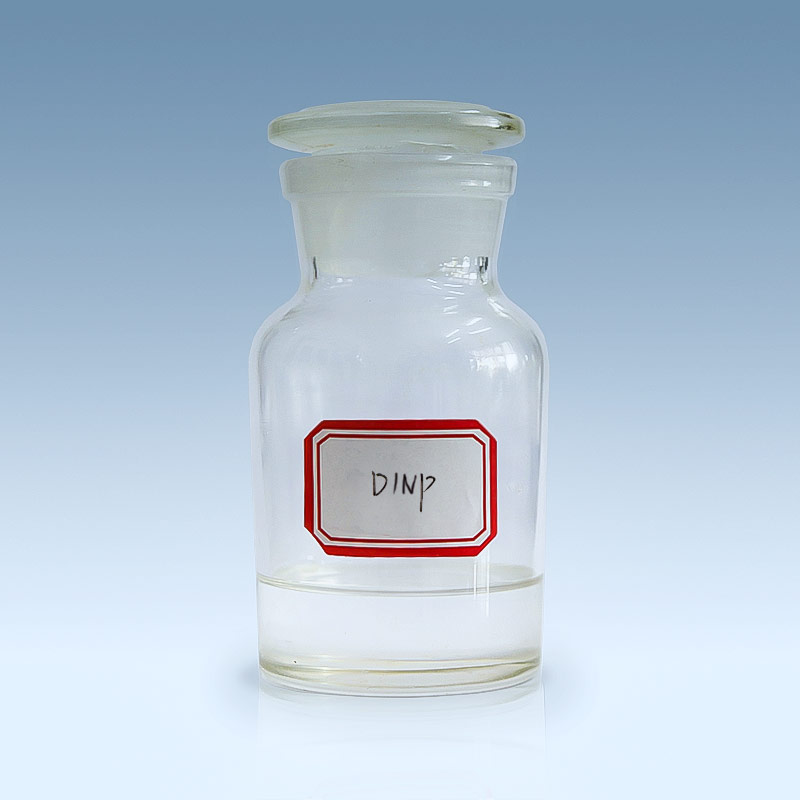
At room temperature, DINP is a clear to slightly yellow, oily liquid with very low volatility and minimal water solubility. These physical characteristics are central to its utility: low volatility means it doesn't evaporate out of finished products quickly, while its compatibility with PVC at the molecular level allows it to be incorporated at high loading levels — sometimes exceeding 50 parts per hundred resin (phr) — without blooming or migrating to the surface under normal use conditions. It is one of the most widely produced plasticizers in the world, with global consumption measured in hundreds of thousands of metric tons annually.
How DINP Works as a Plasticizer in PVC
To understand why DINP Diisononyl Phthalate is so widely used, it helps to understand what plasticizers actually do at the molecular level. Unplasticized PVC (uPVC or rigid PVC) is a brittle, hard material that would crack or shatter under many real-world use conditions. When a plasticizer like DINP is blended into PVC during processing, its molecules insert themselves between the polymer chains, increasing the free volume between chains, reducing intermolecular forces, and lowering the glass transition temperature (Tg) of the material. The result is a flexible, rubbery compound that can be bent, stretched, and compressed without breaking.
DINP is classified as a general-purpose plasticizer — meaning it performs reliably across a broad range of temperatures and processing conditions without requiring special handling. It is compatible with a wide range of secondary stabilizers, fillers, and pigments used in PVC compounding, which makes it versatile for formulators. Its relatively high molecular weight compared to older phthalate plasticizers like DEHP (diethylhexyl phthalate, MW ~390 g/mol) contributes to lower migration rates in finished products and lower vapor pressure during processing, which reduces worker exposure to airborne plasticizer during manufacturing.
Key Physical and Chemical Properties
| Property | Value |
| CAS Number | 28553-12-0 / 68515-48-0 |
| Molecular Weight | ~418.6 g/mol |
| Appearance | Clear to pale yellow oily liquid |
| Boiling Point | >250°C (482°F) |
| Vapor Pressure (25°C) | <0.001 mmHg (very low) |
| Water Solubility | <0.2 mg/L (practically insoluble) |
| Flash Point | >200°C (392°F) |
| Density | ~0.972 g/cm³ at 20°C |
Primary Industrial Applications of Diisononyl Phthalate
DINP plasticizer is found in an extraordinarily wide range of finished products across construction, automotive, consumer goods, and wire and cable industries. Its combination of performance, processability, and cost-effectiveness makes it the preferred choice for many flexible PVC applications where long service life and good mechanical properties are required.
Wire and Cable Insulation and Jacketing
One of the single largest end uses for DINP is in wire and cable applications. Flexible PVC insulation and jacketing compounds plasticized with DINP provide the necessary flexibility for cables to be bent, routed, and installed without cracking, while also delivering good electrical insulation properties, flame retardancy when combined with appropriate stabilizer systems, and resistance to heat aging over decades of service life. Building wire, appliance cords, automotive wiring harnesses, and telecommunications cables all commonly use DINP-plasticized PVC compounds.
Flooring and Wall Coverings
Vinyl flooring — including luxury vinyl tile (LVT), vinyl composition tile (VCT), sheet vinyl, and vinyl-backed carpet — relies heavily on DINP as the plasticizer in both the wear layer and backing layers. The plasticizer must remain stable and non-migrating over the 10–30 year service life of the flooring, resist plasticizer extraction by cleaning agents and floor waxes, and maintain flexibility over a wide temperature range. DINP meets all of these requirements well, which is why it dominates this application segment. Vinyl wallcovering similarly uses DINP-plasticized PVC formulations.
Automotive Interior Components
The automotive sector is a major consumer of diisononyl phthalate, particularly for interior trim components including dashboards, door panels, seat materials, and underhood wire harnesses. Automotive-grade flexible PVC must maintain its flexibility and appearance across extreme temperature swings — from -40°C in winter storage to over 100°C inside a parked car in summer — without cracking, fogging the windshield from outgassing, or emitting objectionable odors. DINP's low vapor pressure and high molecular weight make it significantly better suited to automotive interior applications than lower-molecular-weight plasticizers.
Coated Fabrics and Artificial Leather
PVC-coated fabrics — used in furniture upholstery, marine covers, awnings, tarpaulins, and fashion accessories — are typically plasticized with DINP at loadings of 50–80 phr to achieve the desired softness and drape. The coating must remain supple and crack-free through years of flexing, UV exposure, and cleaning. DINP-plasticized coated fabrics also accept surface textures well during calendering, which allows manufacturers to create convincing leather grain patterns and other surface finishes on the material.
Other Notable Applications
- Garden hoses and irrigation tubing: DINP provides the flexibility and UV resistance needed for outdoor PVC tubing products that must survive years of outdoor use.
- Seals, gaskets, and weatherstripping: DINP-plasticized PVC compounds are used in window and door weatherstripping, pipe joint seals, and automotive body seals where long-term compression set resistance is important.
- Plastisols and organosols: DINP is used as the primary plasticizer in PVC plastisols — liquid dispersions of PVC resin in plasticizer — used for underbody coatings, fabric coatings, and molded foam products.
- Footwear: PVC injection-molded soles and sandal uppers commonly use DINP to achieve the required flexibility and durability at an economical cost.
DINP vs. DEHP and Other Plasticizers: Key Differences
Understanding where DINP sits in the broader landscape of plasticizers is important for both formulators making technical decisions and procurement teams navigating regulatory requirements. The most important comparison is between DINP and DEHP (di(2-ethylhexyl) phthalate), since DINP was widely adopted as a replacement for DEHP when DEHP came under regulatory pressure in many markets.
| Plasticizer | Molecular Weight | Migration Rate | EU SVHC Status | Primary Use |
| DINP (Diisononyl Phthalate) | ~418 g/mol | Low | Not listed (general use) | General-purpose flexible PVC |
| DEHP (Di(2-ethylhexyl) Phthalate) | ~390 g/mol | Moderate | SVHC (reprotoxic) | Legacy general-purpose PVC |
| DIDP (Diisodecyl Phthalate) | ~446 g/mol | Very low | Not listed | High-temp wire & cable |
| DOTP (Di(2-ethylhexyl) Terephthalate) | ~390 g/mol | Low | Not listed | Non-phthalate alternative |
| DINCH (Diisononyl Cyclohexane-1,2-dicarboxylate) | ~424 g/mol | Low | Not listed | Sensitive applications (toys, medical) |
The key takeaway from this comparison is that DINP occupies a strong middle ground: better regulatory standing and lower migration than DEHP, comparable performance to DIDP with slightly better processing economics, and lower cost than specialty non-phthalate alternatives like DINCH. For most general-purpose flexible PVC applications outside of highly sensitive end uses (children's toys, food contact, medical devices), DINP remains a technically sound and commercially practical choice in most markets.
Regulatory Status of DINP Around the World
The regulatory landscape for diisononyl phthalate varies considerably by region and application. Unlike DEHP, DBP, and BBP — which are classified as substances of very high concern (SVHC) under EU REACH due to reproductive toxicity — DINP has not been classified as an SVHC for general use. However, it is subject to specific use restrictions in certain applications, most notably in children's products.
European Union (EU REACH)
Under EU REACH Annex XVII (Entry 51), DINP is restricted to a maximum concentration of 0.1% by weight in toys and childcare articles that can be placed in the mouth by children. This restriction was introduced because children mouthing soft PVC toys can ingest plasticizer, and despite DINP's better toxicological profile compared to DEHP, regulatory authorities applied a precautionary restriction to this category. For all other applications in the EU, DINP is not subject to concentration restrictions under REACH, though standard workplace exposure guidelines apply during manufacturing.
United States
In the United States, the Consumer Product Safety Improvement Act (CPSIA) of 2008 permanently banned DEHP, DBP, and BBP in children's toys and child care articles above 0.1%, and placed an interim restriction on DINP, DIDP, and DnOP at the same 0.1% threshold pending review by the Consumer Product Safety Commission (CPSC). Following a comprehensive review by the Chronic Hazard Advisory Panel (CHAP), the CPSC determined in 2017 that DINP used in toys that can be placed in the mouth by children under age 3 should remain restricted at 0.1%. For all other consumer and industrial applications in the US, there are no federal concentration limits on DINP, though California's Proposition 65 lists DINP as a chemical known to the state to cause cancer, requiring appropriate warning labels for products sold in California.
Other Markets
- China: GB 6675 (national toy safety standard) restricts phthalates including DINP to 0.1% in toys intended for children under 3 and in toys that can be placed in the mouth. Industrial use is not restricted.
- Canada: The Canada Consumer Product Safety Act restricts phthalates including DINP in soft vinyl toys and childcare articles to 1,000 mg/kg (0.1%). Non-toy and industrial applications are not restricted federally.
- Japan: DINP is listed under Japan's Chemical Substances Control Law (CSCL) and is subject to reporting requirements, but is not classified as a restricted substance for general industrial use. Toy safety standards align broadly with international norms.
- South Korea: Korean toy safety regulations restrict DINP at 0.1% in toys and childcare products, consistent with OECD guidance. Korea's K-REACH system requires registration for substances produced or imported above threshold volumes.
Safety and Toxicology: What the Science Says About DINP
The health and safety profile of DINP has been extensively studied over several decades, driven largely by concerns about the phthalate class of chemicals following regulatory scrutiny of DEHP. The overall conclusion from the weight of scientific evidence is that DINP has a substantially different and more favorable toxicological profile than the reproductive-toxic phthalates (DEHP, DBP, BBP), which is the primary scientific basis for its different regulatory treatment in most markets.
Reproductive and Developmental Toxicity
The most significant health concern historically associated with phthalate plasticizers has been endocrine disruption — specifically, the ability of certain phthalates to reduce testosterone production in developing male fetuses, potentially affecting reproductive organ development. Studies have consistently shown that DEHP and DBP exhibit this anti-androgenic effect in animal models at relevant dose levels. DINP, by contrast, has not shown significant anti-androgenic activity in standard reproductive toxicity test protocols. The EU's Scientific Committee on Toxicology (SCT) and the US CHAP both concluded that DINP does not demonstrate the same endocrine-disrupting reproductive toxicity as the regulated high-concern phthalates, which is why it was not classified as an SVHC for reproductive toxicity under REACH.
Carcinogenicity
High-dose animal studies (primarily in rodents) have shown that DINP can induce liver tumors in rats and mice at very high dietary exposure levels. However, the mechanism by which this occurs — peroxisome proliferation in rodent liver cells — is widely recognized by toxicologists as a rodent-specific phenomenon that does not occur in humans via the same pathway. The International Agency for Research on Cancer (IARC) has not classified DINP as a human carcinogen. California's Proposition 65 listing of DINP as a carcinogen is based primarily on these rodent data and applies a conservative precautionary standard that does not require evidence of human carcinogenicity.
Worker Exposure and Occupational Safety
Because DINP has very low vapor pressure and low volatility, airborne exposure during processing is considerably lower than with shorter-chain plasticizers. Standard industrial hygiene practices — including local exhaust ventilation at mixing and processing equipment, use of appropriate PPE during direct handling, and routine air monitoring — are generally sufficient to maintain worker exposures well below occupational exposure limits. The DINP plasticizer SDS (Safety Data Sheet) from major producers typically lists an 8-hour TWA occupational exposure limit of 5 mg/m³ (as total dust/mist), consistent with general nuisance dust standards.
Environmental Fate and Ecotoxicology of Diisononyl Phthalate
The environmental behavior of DINP is shaped by its physicochemical properties: very low water solubility, high lipophilicity (log Kow ~8.8), and low vapor pressure. These characteristics mean that DINP released to the environment partitions strongly to soil and sediment rather than remaining in water or air. Its environmental fate and transport differ from more water-soluble chemicals in several important ways.
- Biodegradation: DINP undergoes significant biodegradation in soil and activated sludge environments. Studies indicate that it is ultimately biodegradable, with primary degradation (conversion to metabolites) occurring relatively quickly in aerobic conditions. However, the rate of complete mineralization varies depending on environmental conditions and microbial community composition.
- Aquatic toxicity: DINP shows low acute aquatic toxicity in standard fish and invertebrate tests, with LC50 values typically above 1 mg/L — a threshold that is difficult to achieve in water given its low solubility. Its high binding affinity to sediment and suspended organic matter reduces its bioavailability to aquatic organisms in realistic environmental scenarios.
- Bioaccumulation: Despite its high log Kow, the large molecular size of DINP limits its uptake through biological membranes. Bioconcentration factor (BCF) studies show relatively low bioaccumulation in fish compared to what would be predicted from log Kow alone, which reduces concerns about biomagnification through aquatic food chains.
- Soil and sediment: DINP sorbs strongly to organic matter in soil and sediment, which limits its mobility through the environment but also means it can persist in sediments near point sources of discharge. Sediment-dwelling organisms (benthic invertebrates) may have the highest ecological exposure.
Handling, Storage, and Safe Use Guidelines for DINP
For industrial users of DINP plasticizer, proper handling and storage are important both for safety and for maintaining product quality. DINP is a relatively low-hazard material under normal industrial handling conditions, but standard chemical handling best practices still apply.
Storage Recommendations
DINP should be stored in tightly sealed containers — typically carbon steel or stainless steel tanks or drums — away from strong oxidizing agents, strong bases, and heat sources. The recommended storage temperature is between 10°C and 40°C. At very low temperatures, DINP may become more viscous, which can slow pumping and transfer operations; mild heating (to no more than 60°C) can be used to reduce viscosity for transfer if needed. Avoid prolonged storage in PVC containers, as the plasticizer can migrate into the container walls, causing them to soften and fail.
Personal Protective Equipment (PPE)
- Skin protection: Chemical-resistant gloves (nitrile or neoprene recommended) should be worn when handling bulk DINP to prevent prolonged skin contact. While DINP is not a strong skin irritant, repeated or prolonged contact should be avoided.
- Eye protection: Safety glasses with side shields or chemical splash goggles should be worn during transfer and mixing operations to protect against splash.
- Respiratory protection: Under normal processing conditions, respiratory protection is generally not required given DINP's very low vapor pressure. However, if mist generation is possible (e.g., during high-speed mixing or spray operations), a half-face respirator with organic vapor/P100 combination cartridges is appropriate.
- Spill response: Spills should be absorbed with inert material (sand, vermiculite, dry earth) and collected for disposal. DINP is slippery and creates a significant slip hazard on floors. Prevent spills from reaching drains, waterways, or soil.
When to Choose DINP and When to Consider Alternatives
DINP remains a highly practical and technically sound plasticizer for most general-purpose flexible PVC applications. However, there are specific situations where formulators and product designers should consider whether an alternative plasticizer would better serve their needs:
- Choose DINP when you need a proven, cost-effective general-purpose plasticizer for wire and cable, flooring, coated fabrics, garden hose, automotive interior trim, or industrial profiles where there are no specific restrictions on phthalate content and long-term performance stability is a priority.
- Consider DINCH or DOTP instead for children's toys, teething rings, food contact materials, or medical devices where the precautionary restrictions on DINP apply and where a non-phthalate or alternative chemistry is preferred by the customer, retailer, or regulatory body in your target market.
- Consider DIDP instead for applications requiring very high heat stability, such as cables rated for continuous service above 90°C, where DIDP's higher molecular weight provides incrementally better long-term retention at elevated temperatures.
- Consider bio-based plasticizers (such as ESBO, acetylated castor oil, or bio-derived adipates) when your brand positioning requires renewable content or when your end-use market is moving toward fully biobased material declarations. Note that these often require formulation adjustment to achieve equivalent performance to DINP in flexible PVC.
- Review California Prop 65 compliance before using DINP in any consumer products sold in California. Products above the safe harbor level require Prop 65 cancer warnings, which some brands prefer to avoid through alternative plasticizer selection regardless of the regulatory science debate around DINP's actual cancer risk to humans.