

 English
 中文简体
中文简体Content
- 1 What Dioctyl Adipate Actually Is
- 2 How DOA Works as a Plasticizer
- 3 Key Physical and Chemical Properties
- 4 Industries and Applications That Rely on Dioctyl Adipate
- 5 Dioctyl Adipate vs. Other Common Plasticizers
- 6 Handling, Storage, and Safety Considerations
- 7 What to Check When Sourcing Dioctyl Adipate
What Dioctyl Adipate Actually Is
Dioctyl adipate — commonly abbreviated as DOA — is a synthetic ester produced by reacting adipic acid with 2-ethylhexanol. Its full chemical name is bis(2-ethylhexyl) adipate, and it appears in technical documentation under both names interchangeably. The compound has a CAS number of 103-23-1, which is the reference you'll see on safety data sheets and import/export documentation worldwide.
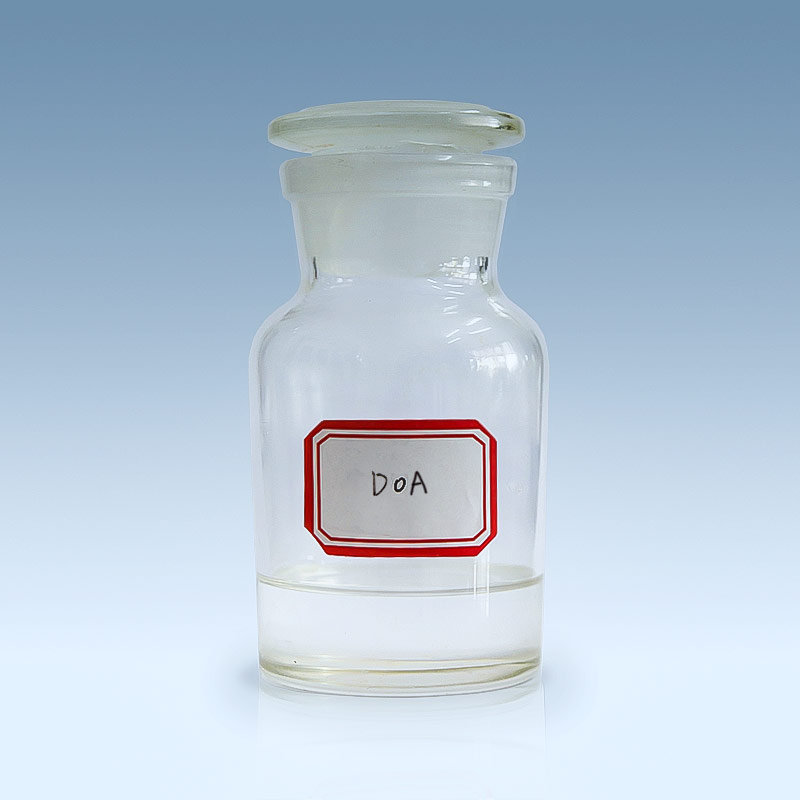
At room temperature, DOA is a clear, oily liquid with low viscosity and a very faint characteristic odor. It is practically insoluble in water but mixes readily with most organic solvents and polymers, which is precisely what makes it useful in industrial applications. Its molecular weight sits at approximately 370.57 g/mol, and its boiling point exceeds 210°C at reduced pressure, giving it good thermal stability across a wide processing range.
Unlike some plasticizers that are tailored for a single polymer system, dioctyl adipate is versatile enough to function across several resin types, though it is most widely used with polyvinyl chloride (PVC). Its relatively low glass transition temperature depression — meaning it keeps materials flexible even at temperatures well below freezing — is the property that sets it apart from phthalate-based alternatives in cold-weather applications.
How DOA Works as a Plasticizer
To understand why dioctyl adipate plasticizer is valued, it helps to understand what plasticizers do in general. Polymers like PVC in their unmodified state are rigid and brittle — their long molecular chains are tightly packed and resist movement. A plasticizer works by inserting itself between those chains, increasing intermolecular spacing, reducing the forces holding the chains together, and allowing them to slide past each other more freely. The result is a softer, more pliable material without changing the polymer's fundamental chemistry.
DOA performs this function particularly well at low temperatures. Most plasticizers maintain flexibility at ambient conditions but become stiff as temperature drops. The adipate ester structure of dioctyl adipate has a naturally low pour point (around -67°C) and a low glass transition temperature, which translates directly into finished products that remain soft and workable in cold storage environments, outdoor winter applications, or refrigerated packaging contexts. This makes DOA the plasticizer of choice wherever cold-temperature flexibility is a specification requirement rather than a nice-to-have.
The concentration at which DOA is used typically ranges from 20 to 60 parts per hundred resin (phr), depending on the target flexibility level and the other additives in the formulation. At higher loading levels, some migration to the surface can occur over time, which is why formulators often combine DOA with a primary plasticizer that has better permanence, using the adipate ester to contribute flexibility without carrying the full plasticizer load alone.
Key Physical and Chemical Properties
Having the right data on hand when specifying or sourcing dioctyl adipate prevents costly formulation mismatches. The table below summarizes the most important properties that buyers, formulators, and quality control teams refer to regularly.
| Property | Value / Description |
| CAS Number | 103-23-1 |
| Molecular Formula | C₂₂H₄₂O₄ |
| Molecular Weight | 370.57 g/mol |
| Appearance | Clear, colorless to pale yellow oily liquid |
| Density | ~0.927 g/cm³ at 20°C |
| Boiling Point | >210°C (at 5 mmHg) |
| Pour Point | Approximately -67°C |
| Flash Point | ~196°C (open cup) |
| Water Solubility | Practically insoluble (<0.1 g/L at 20°C) |
| Refractive Index | ~1.447 at 20°C |
Industries and Applications That Rely on Dioctyl Adipate
The DOA chemical finds use across a broader range of end markets than many buyers initially expect. Its combination of low-temperature flexibility, moderate compatibility with PVC, and relatively clean toxicological profile compared to older phthalate plasticizers has opened doors in several regulated sectors.
Food Packaging and Cling Films
One of the most significant uses of dioctyl adipate is in PVC cling wrap and food-contact films. DOA's approval status under various food-contact regulations — including FDA 21 CFR in the United States and corresponding EU regulations — makes it one of the few plasticizers that can legally be used in films that directly contact fatty or oily foods. The cold-flexibility profile is critical here too, since food packaging routinely goes from room temperature into refrigerated or frozen environments without losing its stretch and cling properties.
Wire and Cable Insulation
Electrical wire and cable jacketing that must perform in cold outdoor environments — such as automotive wiring, outdoor extension cords, and low-temperature industrial cables — frequently incorporates DOA plasticizer as part of the PVC compound. Standards for automotive wiring harnesses in particular often specify cold-bend and cold-impact test requirements that general-purpose plasticizers fail, while DOA-containing formulations pass with margin. It is commonly used alongside DINP or DIDP to balance cost and cold-weather performance.
Artificial Leather and Coated Fabrics
PVC-coated fabrics used in upholstery, automotive interiors, luggage, and outerwear require a plasticizer system that keeps the coating supple at the temperature extremes these products encounter. Dioctyl adipate is used in these applications both for its flexibility contribution and because it helps the coating layer bond more evenly during the knife-over-roll or calender coating process. In automotive seat covers specifically, the combination of cold-crack resistance and resistance to extraction by skin oils makes DOA a standard inclusion in compound recipes.
Medical Devices and Tubing
While DEHP has historically dominated medical PVC applications, growing regulatory scrutiny around phthalates has pushed formulators to evaluate alternatives. Bis(2-ethylhexyl) adipate has been investigated and used in certain medical tubing and blood bag formulations, particularly in markets where phthalate restrictions apply to medical devices. Its relatively favorable biological fate and lower estrogenic activity compared to DEHP make it a candidate worth evaluating, though any medical use requires thorough biocompatibility testing under ISO 10993 or equivalent standards.
Specialty Adhesives, Sealants, and Coatings
Beyond PVC, DOA finds application as a processing aid and flexibility modifier in acrylic coatings, polyurethane sealants, and some nitrocellulose lacquers. In these systems it functions less as a traditional polymer plasticizer and more as a reactive or non-reactive modifier that adjusts film hardness, reduces cracking at low temperatures, and improves application at cold ambient conditions. Formulators working on cold-climate construction sealants often find that small additions of dioctyl adipate extend the application temperature window significantly.
Dioctyl Adipate vs. Other Common Plasticizers
Choosing between plasticizers is rarely a straightforward decision. Cost, regulatory status, compatibility, permanence, and application-specific performance requirements all feed into the selection. The comparison below covers the plasticizers most commonly evaluated alongside DOA.
| Plasticizer | Cold Flexibility | Permanence | Cost | Food Contact | Regulatory Pressure |
| DOA (Dioctyl Adipate) | Excellent | Moderate | Medium | Approved (select uses) | Low |
| DEHP (DOP) | Good | High | Low | Restricted | High (SVHC listed) |
| DINP | Moderate | High | Low–Medium | Limited | Medium |
| TOTM | Poor | Very High | High | Medical grade | Low |
| Citrate Esters (ATBC) | Good | Low–Moderate | High | Widely approved | Very Low |
The table makes clear that DOA occupies a specific niche: it outperforms most alternatives on cold flexibility, carries acceptable regulatory status, but trails some competitors on permanence. This is why it frequently appears as a secondary plasticizer in blended systems rather than the sole plasticizer in a compound.
Handling, Storage, and Safety Considerations
Dioctyl adipate has a relatively benign safety profile compared to many industrial chemicals, but proper handling and storage practices still apply and should be followed consistently.
Storage Requirements
- Store in tightly sealed containers away from direct sunlight and heat sources. Recommended storage temperature is between 5°C and 40°C.
- Use stainless steel, carbon steel, or high-density polyethylene containers. Avoid PVC containers for long-term storage, as DOA can gradually extract plasticizers from the container itself.
- Shelf life under proper storage conditions is typically 24 months from production date. Check acid value and color index before using aged material.
Personal Protection During Handling
- Nitrile gloves and safety glasses are recommended for routine handling. The liquid is not acutely toxic by skin contact, but repeated prolonged exposure should be avoided.
- In poorly ventilated areas or during heated processing (compounding, extrusion), use local exhaust ventilation. Vapors at processing temperatures should not exceed occupational exposure limits specified in the relevant SDS.
- DOA is not classified as a carcinogen or reproductive toxin under current EU CLP or US OSHA HazCom standards — a significant regulatory advantage over DEHP and several other phthalate plasticizers.
Environmental and Disposal Notes
DOA is moderately biodegradable and has low acute aquatic toxicity, but release to waterways should still be avoided. Disposal should follow local regulations for organic chemical waste. In most jurisdictions, contaminated DOA can be incinerated at a licensed facility. Spills on soil should be excavated and disposed of as chemical waste rather than left to leach.
What to Check When Sourcing Dioctyl Adipate
Quality variation between DOA suppliers is real and can significantly affect formulation performance. Buyers sourcing dioctyl adipate for the first time — or switching suppliers — should verify the following parameters before approving a new source for production use.
- Purity (ester content): High-grade DOA should have an ester content of 99% or higher. Lower purity grades may contain unreacted alcohol or adipic acid, which affects compatibility and can cause haze in clear PVC compounds.
- Acid value: Should be below 0.10 mg KOH/g. A higher acid value indicates incomplete reaction or degradation during storage, which can cause PVC compound instability and affect heat stabilizer consumption.
- Color (APHA or Hazen): Colorless to very pale yellow, typically below 30 APHA for standard grade and below 15 APHA for premium grade. Color creep during processing is a sign of impurity.
- Water content: Below 0.1% by Karl Fischer titration. Moisture in the plasticizer causes processing problems in PVC compounding and can affect the performance of tin or calcium-zinc heat stabilizer systems.
- Food-contact certification: If DOA is being used in food-contact applications, request documentation confirming compliance with FDA 21 CFR 181.27 or EU Regulation 10/2011 (and its amendments), depending on your target market. Not all commercial grades carry this documentation.
- Reach/RoHS compliance documentation: For products destined for the EU or electronics supply chains, request REACH SVHC declarations and RoHS compliance letters as standard parts of the supplier qualification package.