

 English
 中文简体
中文简体Content
- 1 What Is DOP Phthalate?
- 2 Key Physical and Chemical Properties of DOP
- 3 Where DOP Phthalate Is Used Across Industries
- 4 Health and Safety Concerns Around DOP Phthalate
- 5 Global Regulations on DOP Phthalate
- 6 Non-Phthalate Alternatives to DOP Plasticizer
- 7 How to Identify DOP Phthalate in Products and Supply Chains
What Is DOP Phthalate?
DOP phthalate — formally known as dioctyl phthalate or di(2-ethylhexyl) phthalate (DEHP) — is one of the most widely used plasticizers in the world. A plasticizer is a chemical additive that makes rigid plastics soft, flexible, and workable. Without it, materials like polyvinyl chloride (PVC) would be stiff and brittle — completely unsuitable for the hundreds of flexible plastic applications we rely on every day, from vinyl flooring and garden hoses to medical tubing and wire insulation.
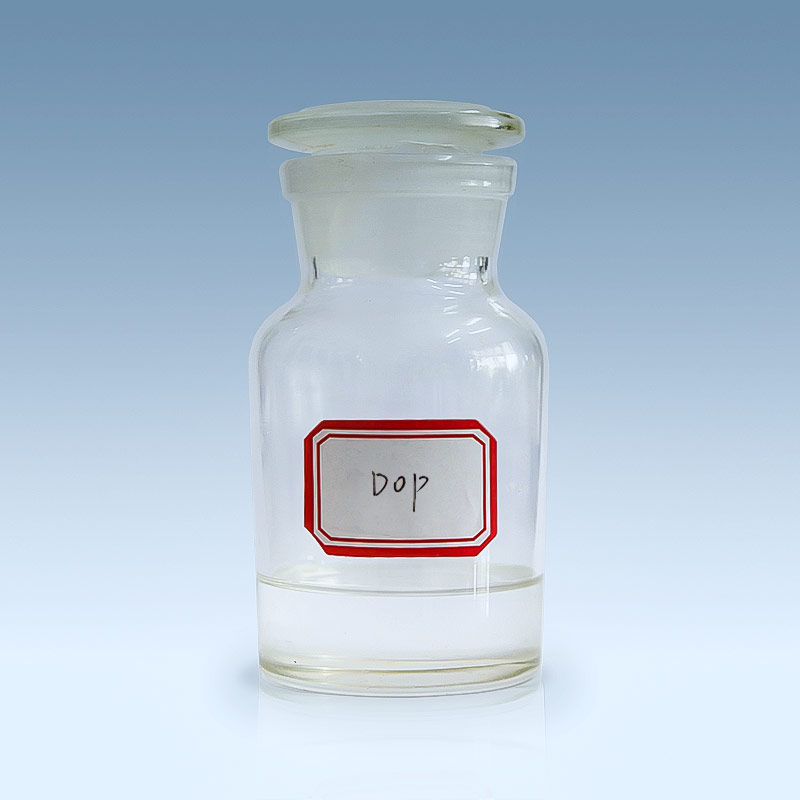
Chemically, DOP is an ester of phthalic acid and 2-ethylhexanol. It appears as a clear, oily liquid with very low water solubility and a high boiling point, which makes it thermally stable and long-lasting inside plastic matrices. Its molecular formula is C₂₄H₃₈O₄, and it has a molecular weight of approximately 390.56 g/mol. When blended into PVC during processing, DOP molecules insert themselves between PVC polymer chains, reducing intermolecular forces and allowing the chains to slide past each other — producing the flexible, rubbery feel that characterizes soft PVC products.
DOP phthalate has dominated the plasticizer market for decades because of its excellent performance-to-cost ratio. It delivers outstanding flexibility, good low-temperature performance, strong electrical insulation properties, and compatibility with a wide range of PVC formulations. For manufacturers working with high-volume applications, no alternative has historically matched DOP's combination of processability, durability, and affordability — though the regulatory and safety landscape is changing that calculus significantly.
Key Physical and Chemical Properties of DOP
Understanding the physical and chemical properties of dioctyl phthalate helps explain why it became the industry-standard plasticizer and why it behaves the way it does inside plastic products. Here is a detailed summary of its most important characteristics:
| Property | Value / Description |
| Chemical Name | Di(2-ethylhexyl) phthalate (DEHP) |
| CAS Number | 117-81-7 |
| Molecular Formula | C₂₄H₃₈O₄ |
| Appearance | Clear, colorless to slightly yellow oily liquid |
| Boiling Point | 385°C (725°F) |
| Flash Point | 218°C (424°F) |
| Density | 0.986 g/cm³ at 20°C |
| Water Solubility | Very low (0.003 g/L at 25°C) |
| Vapor Pressure | Very low (1.32 × 10⁻⁵ mmHg at 20°C) |
| Compatibility | Excellent with PVC, PVB, and cellulosic resins |
| Electrical Resistivity | High — suitable for wire and cable insulation |
Its very low vapor pressure means DOP evaporates slowly at room temperature, which is one reason it remains effective inside plastic products for years. However, this same persistence means it can migrate out of the plastic matrix over time through contact with oils, heat, or mechanical stress — which is the root of many of its safety and environmental concerns.
Where DOP Phthalate Is Used Across Industries
DOP plasticizer is used across a remarkable range of industries and product types. Its versatility comes from the fact that it works effectively across a wide range of PVC formulations and processing conditions, including calendering, extrusion, injection molding, and spread coating. Here are the major application areas:
Construction and Building Materials
The construction industry is one of the largest consumers of DOP-plasticized PVC. Flexible PVC flooring, vinyl wall coverings, window profiles, roofing membranes, and waterproofing sheets all traditionally rely on phthalate plasticizers for flexibility, durability, and UV resistance. DOP is especially prevalent in vinyl flooring products, where it is blended at concentrations of 20–50 parts per hundred resin (phr) to achieve the right balance of softness underfoot and dimensional stability. Its low-temperature flexibility also makes it suitable for outdoor construction applications in cold climates.
Wire and Cable Insulation
Electrical wire and cable insulation and jacketing is another major end use for DOP phthalate. Flexible PVC insulation plasticized with DOP provides excellent dielectric properties, flame retardancy when combined with appropriate additives, and flexibility that allows cables to be bent, routed, and installed without cracking. DOP-plasticized PVC cables are used in residential wiring, automotive wiring harnesses, industrial control cables, and consumer electronics cords. The long service life of DOP in wire insulation — often exceeding 20–30 years — made it the dominant plasticizer choice for decades in this application.
Automotive Components
The automotive sector uses DOP-plasticized PVC in dashboards, door panels, seat coverings, underbody coatings, and sealants. In automotive interiors, the plasticizer must maintain flexibility across an extreme temperature range — from below freezing in winter to over 80°C inside a parked car in summer. DOP's wide service temperature range made it a natural fit for these applications. However, plasticizer migration from automotive interiors onto windshields — contributing to the oily film that builds up inside car windows — is a well-known consequence of using high-volatility plasticizers like DOP, and many automakers have shifted toward lower-migration alternatives.
Medical Devices and Healthcare Products
DEHP (the medical-grade designation for DOP phthalate) has historically been the plasticizer of choice for PVC medical devices, including IV bags, blood bags, dialysis tubing, and oxygen masks. Its extraordinary compatibility with PVC and its ability to produce crystal-clear, flexible films made it ideal for these applications. However, concerns about DEHP leaching into blood and IV solutions — particularly for vulnerable patients such as neonates, pregnant women, and dialysis patients — have led to significant regulatory restrictions and a major industry shift toward non-phthalate alternatives in medical-grade PVC products.
Consumer Goods and Textiles
DOP phthalate also finds its way into a wide range of consumer products, including garden hoses, inflatable toys, artificial leather, rainwear, shower curtains, footwear, and coated fabrics. In textile coating applications, DOP is used in spread-coating and knife-over-roll processes to produce flexible, durable PVC-coated fabrics. Its cost-effectiveness makes it especially prevalent in price-sensitive consumer goods — which is also why its presence in children's toys and products has attracted the most intense regulatory scrutiny.
Health and Safety Concerns Around DOP Phthalate
The health concerns associated with DOP phthalate — specifically DEHP — have been studied extensively over the past three decades and represent the primary reason for its declining use in sensitive applications. The key issue is that DOP is not chemically bonded to the PVC polymer matrix; it is simply dissolved within it. This means it can migrate out of the plastic and into food, liquids, dust, or body fluids that contact the material.
Endocrine Disruption
The most well-established health concern with DEHP is its classification as an endocrine-disrupting chemical (EDC). DEHP and its primary metabolite, MEHP (mono-2-ethylhexyl phthalate), interfere with androgen signaling — the hormonal pathway responsible for male reproductive development. Animal studies have consistently demonstrated that prenatal and early-life exposure to DEHP reduces testosterone production, impairs testicular development, and reduces sperm count and quality. These findings have been replicated across multiple species, and epidemiological studies in humans have found associations between urinary DEHP metabolite levels and reduced sperm quality, altered hormone levels, and shortened anogenital distance in male infants — a sensitive marker of androgen disruption during fetal development.
Reproductive and Developmental Toxicity
DEHP is classified as a reproductive toxicant under multiple regulatory frameworks based on its demonstrated ability to impair fertility and harm fetal development. The European Chemicals Agency (ECHA) classifies DEHP as a Substance of Very High Concern (SVHC) under REACH regulation due to its reproductive toxicity. In animal models, high-dose exposure causes testicular atrophy, reduced litter sizes, and developmental abnormalities. The critical window of concern is prenatal and early postnatal exposure, when the developing endocrine and reproductive systems are most vulnerable to chemical disruption.
Carcinogenicity
DEHP is classified as a possible human carcinogen (Group 2B) by the International Agency for Research on Cancer (IARC), based on sufficient evidence of liver cancer in rodents exposed to high doses and limited evidence in humans. The carcinogenic mechanism in rodents involves peroxisome proliferation — a mode of action that may be less directly applicable to humans, which is why DEHP is classified as a possible rather than probable carcinogen. Nevertheless, this classification contributes to its restricted use in consumer-facing applications.
Routes of Human Exposure
Humans are exposed to DOP phthalate through multiple pathways simultaneously, which is why it is detected in the urine of virtually all people tested in biomonitoring studies:
- Food contact: DEHP migrates from PVC food packaging, food processing equipment gaskets, and plastic wraps into fatty foods. Fatty foods like cheese, meat, and oils absorb significantly more phthalate than low-fat foods.
- Medical procedures: Patients receiving IV therapy, blood transfusions, or dialysis through DEHP-plasticized PVC tubing receive the highest direct exposures — sometimes orders of magnitude above dietary exposure.
- Indoor dust: DEHP migrates from flooring, wall coverings, and other building materials into household dust, which is then ingested — especially by young children through hand-to-mouth behavior.
- Dermal contact: Skin contact with DEHP-containing products such as vinyl gloves, toys, or flooring contributes to exposure, though dermal absorption is slower than ingestion.
- Inhalation: Airborne DEHP from plasticized PVC products in indoor environments contributes to respiratory exposure, particularly in poorly ventilated spaces with significant PVC surfaces.
Global Regulations on DOP Phthalate
Regulatory restrictions on DEHP have tightened dramatically over the past two decades, particularly for applications where exposure to vulnerable populations is likely. Here is an overview of the key regulations across major markets:
| Region / Regulation | Restriction | Affected Products |
| EU REACH (Annex XVII) | Max 0.1% DEHP in articles for consumer use | Toys, childcare articles, consumer articles |
| EU REACH SVHC Authorization | Authorization required for industrial use | Industrial PVC applications |
| US CPSIA (Consumer Product Safety) | Permanently banned above 0.1% in children's toys | Children's toys and childcare articles |
| US FDA | Restricted in food contact materials and medical devices | Food packaging, medical PVC |
| China GB Standards | Max 0.1% in toys; limits in food contact materials | Toys, food packaging |
| Japan METI | Restricted in food wrapping and toys for young children | Food contact, children's products |
| California Prop 65 | Listed as reproductive toxicant; warning required | All consumer products sold in California |
The trend across all major regulatory jurisdictions is clearly toward further restriction, not relaxation. Manufacturers using DOP phthalate in any consumer-facing or food-contact application should be actively planning their transition to compliant alternatives, as the regulatory window for continued use is narrowing.
Non-Phthalate Alternatives to DOP Plasticizer
The restrictions on DOP phthalate have accelerated the development and adoption of non-phthalate plasticizers that can match or approach DOP's performance without the associated health and regulatory concerns. Choosing the right alternative depends on the specific application, processing requirements, performance targets, and cost constraints. Here are the leading alternatives:
DINP and DIDP (Diisononyl and Diisodecyl Phthalate)
DINP and DIDP are higher-molecular-weight phthalate plasticizers that have lower migration rates than DOP due to their larger molecular size. They are currently not subject to the same restrictions as DEHP in most jurisdictions and are widely used as a direct drop-in replacement for DOP in non-sensitive applications such as flooring, cables, and general industrial PVC. However, they are still phthalates, and their regulatory status is under ongoing review — making them a transitional rather than permanent solution for brands committed to moving fully away from phthalates.
DOTP / DEHT (Dioctyl Terephthalate)
DOTP (also called DEHT) is a terephthalate ester rather than a phthalate ester — it uses terephthalic acid instead of phthalic acid as its backbone. This structural difference means it does not share DEHP's endocrine-disrupting properties and is not subject to phthalate regulations. DOTP provides very similar plasticizing efficiency to DOP, processes well on standard PVC equipment, and has better thermal stability and lower volatility. It has become one of the most popular DOP replacements globally and is now used extensively in toys, flooring, automotive, and wire and cable applications.
DINCH (Diisononyl Cyclohexane-1,2-Dicarboxylate)
DINCH is a high-molecular-weight non-phthalate plasticizer specifically developed for sensitive applications including medical devices, food contact materials, and children's toys. It has undergone extensive toxicological testing and has been approved for use in medical PVC by regulatory bodies in Europe and the US. DINCH provides excellent flexibility, low migration, good UV stability, and is physiologically well-tolerated. Its higher cost compared to DOP limits its use to premium or regulated applications, but it is the preferred alternative for medical-grade PVC products replacing DEHP.
Bio-Based Plasticizers
A growing category of bio-based plasticizers derived from natural feedstocks — including epoxidized soybean oil (ESBO), citrate esters (like ATBC and TBC), and isosorbide diesters — offer both non-phthalate chemistry and renewable sourcing. Citrate esters such as acetyl tributyl citrate (ATBC) are FDA-approved for food contact and medical use. Epoxidized vegetable oils are widely used as secondary plasticizers and heat stabilizers in PVC. These bio-based options are increasingly attractive to brands seeking to differentiate on sustainability as well as safety, though their plasticizing efficiency and cost competitiveness compared to DOP vary by application.
How to Identify DOP Phthalate in Products and Supply Chains
For manufacturers, importers, and brands sourcing PVC components or finished goods, identifying whether DOP phthalate is present in a product is both a compliance necessity and a due diligence requirement. Here's how to approach it practically:
- Request material data sheets (MDS) and REACH declarations: Ask your PVC suppliers for full material declarations that identify the plasticizer system used. A compliant supplier should be able to confirm whether DEHP is present and at what concentration.
- Third-party laboratory testing: For finished products, testing by accredited laboratories using methods such as GC-MS (gas chromatography–mass spectrometry) or XRF (X-ray fluorescence) screening can positively identify and quantify phthalate content. XRF is used for rapid screening; GC-MS is the confirmatory method for regulatory compliance.
- Supply chain audits: Conduct periodic audits of PVC compounders and component manufacturers, especially those based in regions with less stringent enforcement, to verify that declared formulations match actual production practice.
- Review product categories against regulatory lists: Cross-reference your product portfolio against restricted substance lists (RSLs) such as the AFIRM RSL, ZDHC MRSL, or your retailer's specific RSL to identify which products require phthalate-free formulations.
- Implement an approved plasticizer list: Define an internal approved plasticizer list for your sourcing specifications that explicitly excludes DEHP and other restricted phthalates, and communicate this requirement clearly to all PVC suppliers and converters in your supply chain.