

 English
 中文简体
中文简体Content
- 1 What DOP Plasticizer Actually Is and How It Works
- 2 Key Physical and Chemical Properties of DOP
- 3 Where DOP Plasticizer Is Used Across Industries
- 4 Regulatory Status of DOP Plasticizer: What Buyers Need to Know
- 5 DOP Plasticizer vs. Its Main Alternatives: DOTP and DINP
- 6 Practical Considerations for Formulators Using DOP Plasticizer
- 7 Sourcing DOP Plasticizer: What to Evaluate in a Supplier
What DOP Plasticizer Actually Is and How It Works
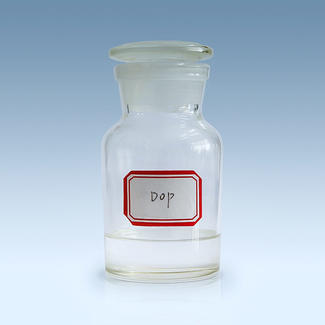
DOP plasticizer — formally known as Dioctyl Phthalate (also written as DEHP, CAS number 117-81-7) — is a chemical additive belonging to the phthalate ester family. At room temperature, it presents as a clear, colorless, oily liquid with low odor and high purity levels typically at or above 99.5%. Its primary function is to increase the flexibility, workability, and durability of rigid polymers, most prominently Polyvinyl Chloride (PVC).
The mechanism behind DOP is straightforward. In its unplasticized state, PVC is a rigid, brittle material. When DOP is introduced into the polymer matrix, its molecules insert themselves between the PVC polymer chains, acting as a kind of molecular lubricant. This reduces the intermolecular forces that hold the chains tightly together, allowing the material to flex, stretch, and bend without cracking. Even at relatively low concentrations, DOP delivers significant gains in elasticity — which is why it became the world's dominant general-purpose plasticizer through most of the 20th century.
DOP is synthesized through the esterification reaction of phthalic anhydride with 2-ethylhexanol (n-octanol). The resulting compound has a molecular weight of approximately 390.56 g/mol, a boiling point around 384°C, and an autoignition temperature between 370–382°C — properties that collectively contribute to its thermal stability and low volatility under normal processing and service conditions.
Key Physical and Chemical Properties of DOP
Understanding the physical and chemical profile of DOP plasticizer is essential for formulators selecting additives for specific performance requirements. The table below summarizes the core property data:
| Property | Value / Description |
|---|---|
| Chemical Name | Dioctyl Phthalate / Di(2-ethylhexyl) phthalate (DEHP) |
| CAS Number | 117-81-7 |
| Appearance | Clear, colorless oily liquid |
| Molecular Weight | ~390.56 g/mol |
| Boiling Point | ~384°C (723°F) |
| Autoignition Temperature | 370–382°C (698–720°F) |
| Purity (technical grade) | ≥99.5% |
| Volatility | Low |
| Solubility in Water | Negligible |
| UV / Heat Stability | Good |
| Electrical Insulation | Good |
Several of these properties directly explain DOP's historical dominance in the plasticizer market. Its low volatility means plasticized products retain their flexibility over extended service life rather than becoming brittle as the additive evaporates. Its good resistance to hydrolysis makes it stable in humid or wet environments. And its broad compatibility — it blends effectively with PVC, polystyrene (PS), polyimide (PI), and various rubber compounds — means a single product can serve across a wide range of formulations.
Where DOP Plasticizer Is Used Across Industries
Dioctyl phthalate plasticizer has historically been deployed across nearly every sector that processes flexible PVC or works with polymer compounds requiring enhanced softness. The applications span industrial, construction, automotive, and agricultural end uses.
Cables and Wire Insulation
One of the largest volume applications for DOP is in the insulation and jacketing of electrical cables and wires. Flexible PVC insulation plasticized with DOP provides the electrical isolation properties required by wire and cable specifications, while maintaining the mechanical flexibility needed for installation and long-term movement in service. DOP's good low-temperature performance is particularly valued in cable applications where materials must remain pliable in cold environments without cracking or stiffening.
Vinyl Flooring and Wall Coverings
Flexible PVC flooring — including vinyl tiles, sheet flooring, and luxury vinyl planks — relies heavily on plasticizers to achieve the required softness underfoot and dimensional stability. DOP has been the workhorse plasticizer for these products, contributing both processability during calendering and flexibility in the finished floor. Similar considerations apply to PVC wall covering materials used in commercial and residential construction.
Artificial Leather and PVC Films
Artificial leather (PU/PVC coated fabrics) and flexible PVC films for packaging, agricultural applications, and industrial sheeting all depend on plasticized PVC formulations. DOP enables these materials to achieve the drape, feel, and elongation properties required for their end use. In agricultural applications, DOP-plasticized greenhouse films benefit from the compound's UV resistance properties, extending the functional life of the film in outdoor exposure.
Automotive Components
Interior automotive components — including dashboards, door panels, seat coverings, and underbody PVC coatings — have historically used DOP as a primary plasticizer. The material's combination of flexibility, durability, and resistance to temperature cycling makes it well suited to the demanding environment inside a vehicle, where surfaces must withstand both high summer heat and winter cold without cracking or surface degradation.
Plastisol Coatings and Sealants
Plastisol formulations — liquid PVC dispersions that are applied by dipping, spraying, or coating and then cured by heat — use DOP extensively as the primary plasticizer. These are used in applications including tool handle coatings, wire form coatings, industrial fabric coatings, and metal surface treatments. DOP's high plasticizing efficiency means effective gel formation and good final film properties at standard processing temperatures.
Medical Devices (Legacy Applications)
Historically, DOP-plasticized PVC tubing was widely used in medical devices including blood bags, IV tubing, and dialysis equipment, where the material's flexibility and clarity were valued. This application area has been significantly reduced or eliminated in many markets due to health concerns related to phthalate migration in medical-grade contact applications, and has largely transitioned to alternative plasticizers.
Regulatory Status of DOP Plasticizer: What Buyers Need to Know
The regulatory landscape around DOP (DEHP) is one of the most important practical considerations for any manufacturer currently using or evaluating this plasticizer. The restrictions are substantial, market-specific, and have been expanding steadily over the past two decades.
European Union
The EU enacted the most far-reaching restrictions on DOP. Under REACH regulations, DEHP (DOP) was classified as a Substance of Very High Concern (SVHC) due to evidence of endocrine disruption and reproductive toxicity. As of February 2015, DOP is banned for general use in the European Union, with only limited authorization available for specific applications and subject to sunset conditions. Residual production within Europe is largely confined to medical applications such as blood bags, where no adequate alternative has yet been formally qualified.
United States and Canada
In the US, the Consumer Product Safety Improvement Act (CPSIA) restricts DOP to a maximum of 0.1% in children's toys and childcare articles. Canada has implemented similar restrictions under its regulations governing toxic substances. Broader industrial uses remain permitted under existing US regulations, but the market has been transitioning toward alternatives driven by customer specifications and supply chain sustainability requirements rather than blanket prohibitions.
France
France implemented a national ban on DOP in 2015, predating the EU-wide sunset and extending to a broader range of applications than the EU baseline restriction at the time.
Global Market Direction
Even in markets where DOP remains technically permitted for industrial applications, commercial demand has declined significantly as global supply chains — particularly those serving European and North American end customers — have shifted specifications to require REACH-compliant plasticizers. Procurement teams sourcing DOP for export products or for use in goods that will be sold into regulated markets should verify the compliance requirements of their specific product category and destination market before finalizing formulation decisions.
DOP Plasticizer vs. Its Main Alternatives: DOTP and DINP
The phase-out of DOP in regulated markets has driven rapid adoption of two primary alternatives: DOTP (Dioctyl Terephthalate, also called DEHT) and DINP (Diisononyl Phthalate). Both were developed specifically to replicate DOP's plasticizing performance while addressing the health and regulatory concerns associated with the original compound. Understanding the differences between these options is essential for any formulator making a transition decision.
| Property | DOP (DEHP) | DOTP (DEHT) | DINP |
|---|---|---|---|
| Chemical family | Ortho-phthalate (LMW) | Terephthalate (non-phthalate) | Ortho-phthalate (HMW) |
| EU regulatory status | Banned (since 2015) | Permitted (no classification of concern) | Permitted (HMW, low migration risk) |
| Plasticizing efficiency | High | High (comparable to DOP) | High (comparable to DOP) |
| Thermal stability | Good | Superior to DOP | Good |
| Low-temperature flexibility | Good | Better than DOP | Good |
| Migration from PVC | Higher (smaller molecule) | Lower (larger molecule) | Lower (branched structure) |
| Relative unit cost | Low–Medium | Medium–High | Medium |
| Food contact / medical use | Restricted / prohibited | Approved for certain food contact uses | Restricted in toys and childcare |
The structural reason for DOP's higher migration risk is directly related to its molecular size. DOP's straight-chain ester structure is relatively compact, allowing its molecules to migrate out of the PVC matrix over time — particularly under elevated temperatures, mechanical stress, or contact with oils and fats. DINP has a branched ester structure that occupies significantly more molecular space, reducing its ability to migrate from the plastic. DOTP, derived from terephthalic acid rather than phthalic anhydride, is a non-phthalate compound entirely, offering the cleanest regulatory profile of the three.
For manufacturers making the transition from DOP, DOTP is generally the preferred drop-in replacement where regulatory compliance is the primary driver, while DINP remains a cost-effective option for industrial applications in markets where phthalate restrictions are less stringent. Both require reformulation testing to confirm performance equivalence in specific compound systems, as DOP substitution is not always a simple one-to-one exchange.
Practical Considerations for Formulators Using DOP Plasticizer
For manufacturers in markets where DOP remains in use — primarily industrial applications in Asia, the Middle East, and parts of Latin America — the following practical considerations are relevant to getting the best performance from DOP-plasticized compounds:
Loading Levels and Plasticizing Efficiency
DOP is classified as a high-efficiency general-purpose plasticizer, meaning meaningful flexibility gains are achievable at lower loading levels compared to some secondary plasticizers. Typical loading levels in flexible PVC range from 30 to 80 parts per hundred resin (phr), depending on the required flexibility of the end product. Cable insulation compounds typically use 35–50 phr, while very flexible products such as soft films or medical-grade tubing (in legacy applications) have used loadings at the higher end of this range.
Compatibility with Other Additives
DOP is broadly compatible with PVC, polystyrene, and polyimide resins. When used in combination with secondary plasticizers — such as epoxidized soybean oil (ESBO), chlorinated paraffins, or adipate esters — DOP functions as the primary plasticizer with the secondary component providing additional functionality such as heat stabilization, cold resistance improvement, or cost reduction. Research has shown that partial replacement of DOP with bio-based auxiliary plasticizers at a 1:1 ratio can improve elongation at break while also enhancing durability, without sacrificing the primary softening performance DOP provides.
Processing Temperatures
DOP's high boiling point (approximately 384°C) provides good thermal stability during typical PVC processing operations including calendering, extrusion, and injection molding, which are typically conducted below 200°C. Significant volatilization losses during processing are not a concern under standard conditions. Heat stabilizers — typically calcium-zinc or barium-zinc systems — should still be incorporated in the compound to protect against PVC degradation during processing, independent of the plasticizer choice.
Storage and Handling
DOP should be stored in sealed containers away from direct sunlight and heat sources. It is not classified as flammable under standard storage conditions (flash point approximately 206°C). Prolonged skin contact should be avoided, and appropriate PPE including gloves and eye protection is standard practice during handling. Suppliers should provide a current Safety Data Sheet (SDS/MSDS) with each shipment, and this documentation should be reviewed before use to confirm compliance with local occupational health requirements.
Sourcing DOP Plasticizer: What to Evaluate in a Supplier
For buyers in markets where DOP remains commercially active, supplier selection involves more than price per tonne. Several quality and compliance factors materially affect the performance of DOP in downstream production:
- Purity specification and certification. Technical-grade DOP is commercially available at 99.5% purity and above. Request a Certificate of Analysis (CoA) with each batch confirming purity, color (APHA), acid value, and moisture content. Inconsistent purity between batches can introduce processing variability in sensitive compound formulations.
- Packaging and moisture control. DOP is typically supplied in ISO tank containers, flexitanks, or steel drums. Confirm that packaging is suitable for your receiving infrastructure and that containers are sealed to prevent moisture ingress, which can affect acid value and long-term stability.
- Documentation for regulatory compliance. Even in markets where DOP is permitted, buyers supplying into global supply chains may need to provide documentation confirming the plasticizer content and grade of their finished products. Suppliers should be able to provide Reach declarations, restricted substances declarations, and origin documentation as required.
- Technical support on alternatives. Given the direction of global regulation, working with a supplier who can provide parallel data on DOTP and DINP performance in your specific compound system is strategically valuable. The transition from DOP is not a matter of if but when for most industrial applications serving global markets.
- Supply continuity and lead times. DOP production capacity in Europe has declined significantly following the 2015 ban. Most supply now originates from Asia. Confirm lead times, minimum order quantities, and supply chain resilience — particularly for buyers with continuous production requirements who cannot absorb supply disruptions.