

 English
 中文简体
中文简体Content
- 1 What Is DOP Plasticizer and How Does It Work?
- 2 Key Properties of DOP Plasticizer at a Glance
- 3 How to Select the Right Grade of DOP Plasticizer
- 4 DOP Plasticizer Dosage: How Much Should You Use?
- 5 How to Implement DOP Plasticizer in Your Production Process
- 6 Compatibility of DOP with Other Additives and Polymers
- 7 Common Problems When Using DOP Plasticizer and How to Fix Them
- 8 Safety, Storage, and Handling of DOP Plasticizer
- 9 DOP Plasticizer vs. Common Alternatives: When to Switch
What Is DOP Plasticizer and How Does It Work?
DOP plasticizer — short for dioctyl phthalate, formally known as di(2-ethylhexyl) phthalate or DEHP — is one of the most widely used general-purpose plasticizers in the world. Its primary function is to make rigid polymers, most commonly polyvinyl chloride (PVC), softer, more flexible, and easier to process. Without a plasticizer like DOP, PVC would be stiff, brittle, and unsuitable for the vast majority of its commercial applications.
DOP works by inserting itself between the polymer chains of PVC, increasing the spacing between them and reducing the intermolecular forces that hold the material rigid. The result is a compound that can be stretched, bent, and formed without cracking — a property known as plasticization. DOP is particularly effective because of its long, branched molecular structure, which allows it to remain integrated within the polymer matrix over time without migrating to the surface too quickly.
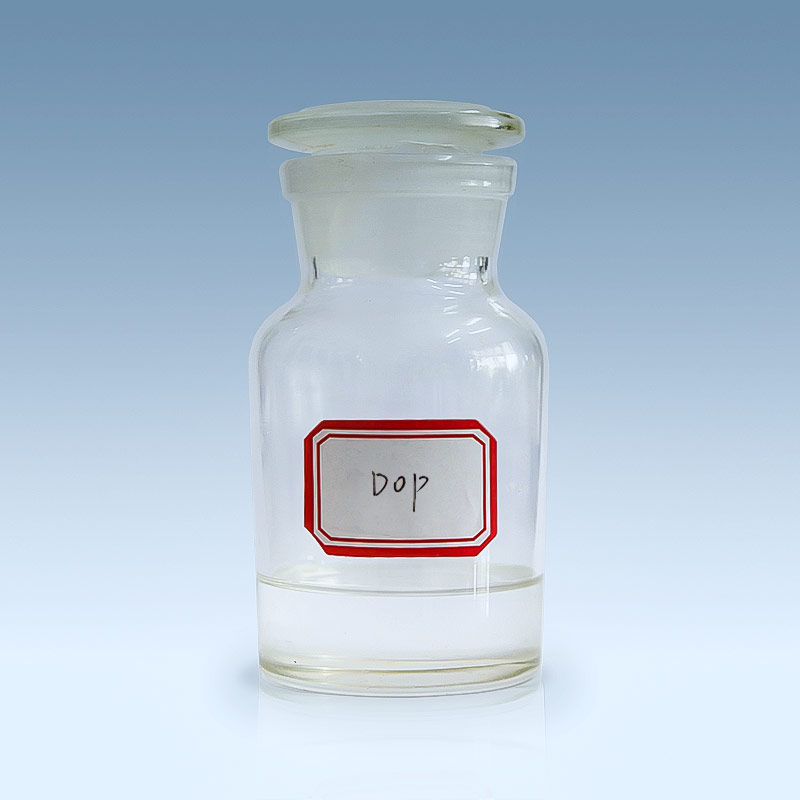
As a colorless, oily liquid with a mild odor, DOP is compatible with a broad range of polymer systems and processing techniques. Its low volatility, good electrical insulation properties, and excellent low-temperature performance make it the default choice across dozens of industries — from cable manufacturing and flooring production to medical tubing and automotive interiors.
Key Properties of DOP Plasticizer at a Glance
Before deciding whether DOP plasticizer is the right choice for your application, it helps to understand its core technical characteristics. The table below summarizes the most important physical and chemical properties you'll encounter on a standard DOP technical data sheet.
| Property | Typical Value |
| Chemical name | Di(2-ethylhexyl) phthalate |
| CAS number | 117-81-7 |
| Molecular weight | 390.57 g/mol |
| Appearance | Clear, colorless oily liquid |
| Density (20°C) | 0.984–0.986 g/cm³ |
| Boiling point | 385°C |
| Flash point | ~215°C (closed cup) |
| Viscosity (25°C) | ~81 mPa·s |
| Water solubility | Practically insoluble (~0.003 g/L) |
| Low-temperature flexibility | Good (down to approx. -50°C) |
These values apply to industrial-grade DOP under standard conditions. Minor variations occur between suppliers and production batches, so always refer to the specific technical data sheet provided with the product you're sourcing.
How to Select the Right Grade of DOP Plasticizer
Not all DOP plasticizer is manufactured to the same standard. While the chemical composition is essentially the same across producers, purity levels, color specifications, and application suitability can vary significantly. Selecting the wrong grade for your process can lead to discoloration, reduced performance, failed regulatory compliance, or rejected product batches.
Industrial Grade DOP
Industrial-grade DOP is the standard choice for general manufacturing applications — flooring, wire and cable insulation, hoses, profiles, and non-critical extruded or calendered products. It typically has a purity of 99% or higher and meets basic color standards (expressed as Hazen or APHA color units, usually below 20). Industrial grade is the most cost-effective option and available in the largest volume from the widest range of suppliers.
Premium or Low-Color Grade DOP
For applications where the finished product must maintain a very light or clear appearance — such as clear PVC film, light-colored cable sheathing, or transparent sheeting — a premium or low-color DOP with an APHA value of 10 or below is recommended. This grade is processed under tighter quality controls to minimize trace impurities that can cause yellowing in the final compound, especially at elevated processing temperatures.
Medical or Food-Contact Grade DOP
Although the use of DEHP (DOP) in medical devices and food-contact materials is now heavily restricted or banned in many jurisdictions — including the EU under REACH regulations and the US FDA for certain applications — some legacy uses and specific markets still permit it under controlled conditions. If your application falls into this category, you must source DOP that complies with the relevant pharmacopoeial standard (e.g., USP or EP grade) and can provide full documentation of purity, residual impurities, and batch traceability. Never substitute industrial-grade DOP for medical-grade applications.
Selecting Based on Application Requirements
Beyond grade, the right selection also depends on these application-specific factors:
- End-use temperature range: DOP performs well from approximately -50°C to +80°C in continuous service. If the product will be exposed to temperatures above 80°C consistently, consider supplementing with or switching to a trimellitate plasticizer such as TOTM for better heat stability.
- Flexibility requirements: DOP delivers moderate to high flexibility. For extremely soft, highly flexible formulations (Shore A hardness below 60), higher DOP loadings or a combination with secondary plasticizers may be needed.
- Regulatory compliance: In Europe, DOP (DEHP) is classified as a substance of very high concern (SVHC) under REACH. Applications for consumer goods, children's products, or food packaging in regulated markets may require alternative plasticizers such as DINP, DIDP, or bio-based options.
- Electrical performance: DOP offers good dielectric properties, making it suitable for cable and wire insulation in most standard voltage applications.
DOP Plasticizer Dosage: How Much Should You Use?
The amount of DOP added to a PVC formulation — expressed as parts per hundred resin (phr) — is one of the most important variables in compound design. Too little DOP and the material remains stiff; too much and you risk excessive migration, reduced tensile strength, or surface tackiness. Finding the right dosage requires balancing flexibility targets against mechanical performance and processing behavior.
The following table provides commonly used DOP loading ranges for typical PVC applications:
| Application | Typical DOP Loading (phr) | Approximate Shore A Hardness |
| Rigid or semi-rigid profiles | 10–20 phr | 85–95 |
| Wire and cable insulation | 30–50 phr | 75–85 |
| PVC flooring and sheeting | 40–60 phr | 65–80 |
| Garden hoses and tubing | 50–70 phr | 55–70 |
| Flexible film and wrap | 30–45 phr | 70–80 |
| Highly flexible gloves / coatings | 70–100 phr | 40–55 |
These ranges are starting points. Your specific PVC resin grade (K-value), the presence of fillers like calcium carbonate or stabilizers, and the processing method all influence the optimal DOP loading. Always conduct small-scale trial batches and mechanical testing before scaling to full production.
How to Implement DOP Plasticizer in Your Production Process
Knowing the right DOP grade and dosage is only half the work — the way you incorporate it into your compound directly affects dispersion quality, processing efficiency, and the final product's performance. The implementation method varies depending on whether you're working with dry blend compounding, internal mixing, or paste (plastisol) formulation.
Dry Blend Compounding (High-Speed Mixing)
Dry blending is the most common method for incorporating DOP into PVC powder for downstream extrusion or calendering. The process involves a high-speed mixer (Henschel type or equivalent) that generates frictional heat, allowing the DOP to be absorbed into the PVC resin particles rather than remaining as a liquid on the surface.
The general dry blend sequence for DOP incorporation is:
- Start the high-speed mixer and add PVC resin at low speed.
- Add heat stabilizers once the resin begins warming (typically around 60°C).
- Slowly add DOP plasticizer — ideally pre-warmed to 40–50°C — through a liquid injection port while continuing to mix at high speed. Avoid dumping the full DOP quantity at once, which can cause clumping.
- Continue mixing until the batch temperature reaches 100–110°C and the blend appears dry and free-flowing (no visible liquid).
- Transfer to a cooling mixer immediately and bring the blend temperature below 40°C before discharge to prevent agglomeration during storage.
Internal Mixing (Banbury or Intermix)
Internal mixers are used when a fully fused, homogeneous compound is required — particularly for rubber-like PVC compounds, high-filler formulations, or products where thorough dispersion of pigments and additives is critical. DOP can be added in the early stages of the mix cycle, typically after the PVC resin has been charged and the rotors have reached operating speed. The high shear conditions inside the mixing chamber ensure rapid and uniform absorption of the liquid plasticizer into the polymer matrix.
Typical internal mixer parameters when using DOP plasticizer include rotor speeds of 40–80 RPM, ram pressure of 0.5–1.0 MPa, and dump temperatures in the range of 160–175°C depending on the formulation. Exceeding these temperatures risks decomposition of the PVC and degradation of the plasticizer.
Plastisol Formulation (Paste PVC)
In plastisol applications — such as coated fabrics, rotational molding, dip coating, and screen printing inks — DOP serves as the primary dispersion medium for paste PVC resin. The PVC particles are dispersed in liquid DOP to form a smooth, pumpable paste that gels and fuses when exposed to heat (typically 160–200°C).
For plastisol preparation, the DOP-to-PVC ratio is crucial. A typical starting formulation uses 50–80 phr DOP for a medium-viscosity paste, with viscosity fine-tuned using additional plasticizer, thixotropic agents, or diluents depending on the application method. DOP should be added to the PVC powder gradually under slow agitation to avoid air entrapment, followed by mechanical degassing before use.
Compatibility of DOP with Other Additives and Polymers
DOP plasticizer does not work in isolation — it's always part of a broader formulation that may include stabilizers, fillers, pigments, lubricants, impact modifiers, and secondary plasticizers. Understanding how DOP interacts with these components prevents costly formulation mistakes.
- With PVC stabilizers: DOP is compatible with all major stabilizer types — calcium-zinc (Ca-Zn), barium-zinc (Ba-Zn), organotin, and lead-based systems. However, some epoxidized soybean oil (ESBO) stabilizers used in food-contact PVC can partially act as co-plasticizers alongside DOP, slightly reducing the effective DOP loading needed.
- With secondary plasticizers: DOP is commonly blended with chlorinated paraffins (CP), epoxidized plasticizers, or adipates to reduce cost or improve specific properties. Chlorinated paraffins reduce cost but can impair low-temperature performance; adipates (like DOA or DIDA) improve cold flexibility. The DOP-to-secondary plasticizer ratio is typically 70:30 to 80:20.
- With fillers: Calcium carbonate (CaCO₃) is the most common filler used alongside DOP in PVC compounds. Higher filler loadings increase compound stiffness and reduce transparency, and may require slightly higher DOP additions to maintain target flexibility.
- With non-PVC polymers: DOP has limited compatibility with most non-polar polymers such as polyethylene (PE) or polypropylene (PP). It can be used with nitrile rubber (NBR) and some polyurethanes but is generally not suitable for use in ABS, polystyrene, or engineering thermoplastics without specific compatibility testing.
Common Problems When Using DOP Plasticizer and How to Fix Them
Even experienced compounders encounter problems when working with DOP. Understanding the root cause of the most common issues helps you resolve them quickly without wasting material or production time.
Plasticizer Migration and Surface Tackiness
If DOP migrates to the surface of the finished product, it creates a greasy or tacky feel, attracts dust, and can cause bonding failures in laminated or coated products. Migration is accelerated by high temperatures, contact with oils or solvents, and excessive DOP loading. Solutions include reducing DOP content, substituting a portion with a higher-molecular-weight plasticizer such as DIDP or TOTM, or reformulating with a polymeric plasticizer that has virtually zero migration.
Poor Low-Temperature Performance
While DOP generally offers good cold flexibility, some applications in extremely cold environments (below -40°C) may see brittleness or cracking. Blending DOP with a low-temperature plasticizer such as DOA (dioctyl adipate) or DOS (dioctyl sebacate) at a ratio of 70:30 typically resolves this without significantly increasing cost.
Compound Discoloration During Processing
Yellowing or browning of the PVC compound during processing is usually a stabilizer issue, but low-quality DOP with elevated APHA color values can contribute to the problem. Switching to a premium low-color DOP grade, reviewing stabilizer dosage, and ensuring processing temperatures remain within the recommended window are the first corrective steps to take.
Inconsistent Plastisol Viscosity
In paste PVC applications, viscosity drift between batches is a frequent complaint. This can result from moisture in the PVC resin, temperature variations during plastisol preparation, or batch-to-batch variation in DOP purity or viscosity. Storing DOP in sealed containers away from moisture, pre-conditioning raw materials to a consistent temperature before mixing, and using DOP from a single verified supplier for critical paste applications all help maintain stable viscosity.
Safety, Storage, and Handling of DOP Plasticizer
DOP plasticizer is classified as a hazardous substance in many jurisdictions due to its reproductive toxicity (CMR category). Handling it safely in the workplace requires awareness of both occupational exposure limits and basic chemical safety protocols.
- Personal protective equipment (PPE): Chemical-resistant gloves (nitrile or neoprene), safety glasses, and protective clothing should be worn when handling bulk DOP. If mist or spray is generated during transfer or injection, respiratory protection may be required.
- Occupational exposure limits: The OSHA PEL for DEHP is 5 mg/m³ as an 8-hour TWA. Many European countries apply the EU occupational exposure limit of 1 mg/m³. Ensure adequate ventilation in mixing and processing areas.
- Storage conditions: Store DOP in closed steel or HDPE containers in a cool, dry, well-ventilated area away from oxidizing agents and direct sunlight. Recommended storage temperature is 5–35°C. Under these conditions, shelf life is typically 24 months.
- Spill response: DOP spills should be absorbed with inert material (sand, vermiculite) and collected in labeled waste containers for disposal in accordance with local chemical waste regulations. Do not allow DOP to enter drains or waterways — it is harmful to aquatic organisms.
- Fire safety: DOP has a relatively high flash point (~215°C) and is not classified as flammable under normal conditions. However, in the event of a fire, CO₂, dry powder, or foam extinguishers should be used. Water spray is effective for cooling containers.
DOP Plasticizer vs. Common Alternatives: When to Switch
DOP has dominated the plasticizer market for decades because of its excellent all-around performance and low cost. However, regulatory pressure, end-use requirements, and sustainability considerations are pushing more formulators to evaluate alternatives. Here's a practical comparison to help you decide when DOP is still the right call and when switching makes sense.
| Plasticizer | Best For | Advantage vs. DOP | Disadvantage vs. DOP |
| DINP | Toys, consumer goods | Lower regulatory risk, better migration resistance | Slightly higher cost, lower solvating efficiency |
| TOTM | High-temperature cables, automotive | Superior heat stability, very low volatility | Significantly higher cost, stiffer at low temperatures |
| DOA / DOS | Cold-climate applications | Excellent low-temperature flexibility | Higher volatility, higher cost |
| ATBC (bio-based) | Food contact, medical | Regulatory acceptance, renewable feedstock | Higher cost, narrower compatibility |
| Polymeric plasticizer | Low-migration coatings, medical tubing | Near-zero migration, excellent permanence | Higher viscosity, harder to process, much higher cost |
For purely industrial, non-consumer-facing applications in markets without SVHC restrictions, DOP plasticizer remains the most cost-effective general-purpose option available. The decision to switch should always be driven by specific regulatory requirements, demonstrated performance gaps, or documented sustainability commitments — not by market perception alone.