

 English
 中文简体
Dioctyl terephthalate, usually shortened to DOTP, is one of the most practical answers to a common formulation question: how do we keep flexible PVC soft, durable, and compliant without relying on traditional ortho-phthalate plasticizers? At Zhejiang Great Chemical Science & Technology Co., Ltd., we have watched that question move from the laboratory to the purchasing department. The answer starts with a clear understanding of what DOTP is and what it does well.
DOTP is also known as bis(2-ethylhexyl) terephthalate, or DEHT. It is a terephthalate ester made from terephthalic acid and 2-ethylhexanol. It behaves like a high-performance primary plasticizer in flexible PVC, but its molecular structure differs from the more familiar DOP. That difference matters in heat aging, volatility, regulatory review, and end-use selection. If you are weighing DOTP for a new compound or replacing an existing plasticizer, the practical questions are rarely just "what is it?" They are "where does it fit, how does it process, and what should I verify before I buy?"
Content
What DOTP Is and Why Formulators Use It
DOTP is a clear, low-color liquid at room temperature. In PVC compounds, it gels and fuses much like general-purpose plasticizers, so many processors can adopt it without rebuilding their entire line. It is used as a primary plasticizer in flexible PVC and also appears in coatings, adhesives, sealants, and selected rubber applications. Because it is a terephthalate rather than an ortho-phthalate, it is often discussed alongside regulatory and sustainability programs that encourage manufacturers to review ortho-phthalate content.
Formulators choose DOTP for a combination of performance and positioning. It offers good plasticizing efficiency, low volatility compared with many general-purpose plasticizers, and strong thermal stability. Those properties are useful in wire and cable insulation and sheathing, where heat aging and long service life matter. Reference literature often points to DOTP as a practical choice for high-temperature cable applications, including 70°C class cables and sheathing compounds.
In production, DOTP can help reduce plasticizer migration and volatility losses during processing and service. It also works well in filled compounds, where good wetting and dispersion can reduce rejects and improve surface quality. Depending on the formulation, DOTP can be used alone or blended with other plasticizers to fine-tune flexibility, low-temperature behavior, and cost. We have also summarized how DOTP performs under different temperature conditions in a separate technical note.
DOTP vs. DOP and Other Plasticizers
The most common comparison is DOTP versus DOP. DOP is a well-established ortho-phthalate with excellent processing behavior and broad availability. DOTP is a terephthalate ester with lower volatility and generally better thermal stability. In many formulations, DOTP can replace DOP on a similar phr basis, but processing conditions, fusion, and final properties should be confirmed with a trial.
| Selection point | DOTP | DOP | DINP |
|---|---|---|---|
| Chemical family | Terephthalate ester | Ortho-phthalate | Ortho-phthalate |
| Volatility | Low | Moderate | Low to moderate |
| Thermal stability | High | Good | Good |
| Regulatory positioning | Often chosen as a non-ortho-phthalate alternative; verify market rules | Subject to restrictions in some markets | Subject to review in some markets |
| Typical use | Wire and cable, sheeting, coated fabrics, automotive | General-purpose flexible PVC | Flexible PVC, wire and cable, flooring |
If your priority is a non-ortho-phthalate terephthalate with good heat aging, DOTP is usually the first candidate. If cost and general-purpose flexibility dominate, DOP may still have a place. DINP sits between them in some discussions, with low volatility and broad use in flexible PVC. The right choice depends on the end product, the regulatory market, and the processing window.
Where DOTP Is Used in Flexible PVC and Beyond
DOTP appears in a wide range of flexible PVC products. Wire and cable compounds are a major outlet, particularly insulation and sheathing that must resist heat aging. It is also used in automotive interiors, underbody coatings, floor coverings, coated fabrics, films, hoses, profiles, and footwear. In each case, the formulator balances plasticizer loading against hardness, tensile strength, elongation, and low-temperature flexibility.
Outside PVC, DOTP can be found in adhesives, sealants, and certain coating systems where low volatility and good compatibility are useful. Medical devices and healthcare applications are sometimes discussed in connection with DOTP because it is an alternative to some ortho-phthalates, but final suitability always depends on the complete formulation and the applicable regulatory pathway. Test the finished article, not just the plasticizer, and verify extraction, migration, and sterilization effects where relevant.
Sourcing DOTP: What to Check Before You Order
Good sourcing starts with a specification that matches your process. Ask for a current technical data sheet and a certificate of analysis for each lot. Key checks include ester content or purity, color, acid value, moisture, and volatility. If the DOTP will be used in a regulated application, request the relevant declarations and confirm that the grade meets the market requirements you actually sell into. A low price per tonne is not a bargain if lot-to-lot variation forces you to adjust your compound or reject finished parts.
Discuss logistics early. DOTP is a liquid bulk product, so packaging, drum or IBC handling, tanker delivery, and storage conditions all affect total cost. Seasonal temperature changes can influence viscosity and pumping, and long storage should be managed with clean, dry equipment. A supplier who understands these details can help you avoid small problems that become expensive production interruptions.
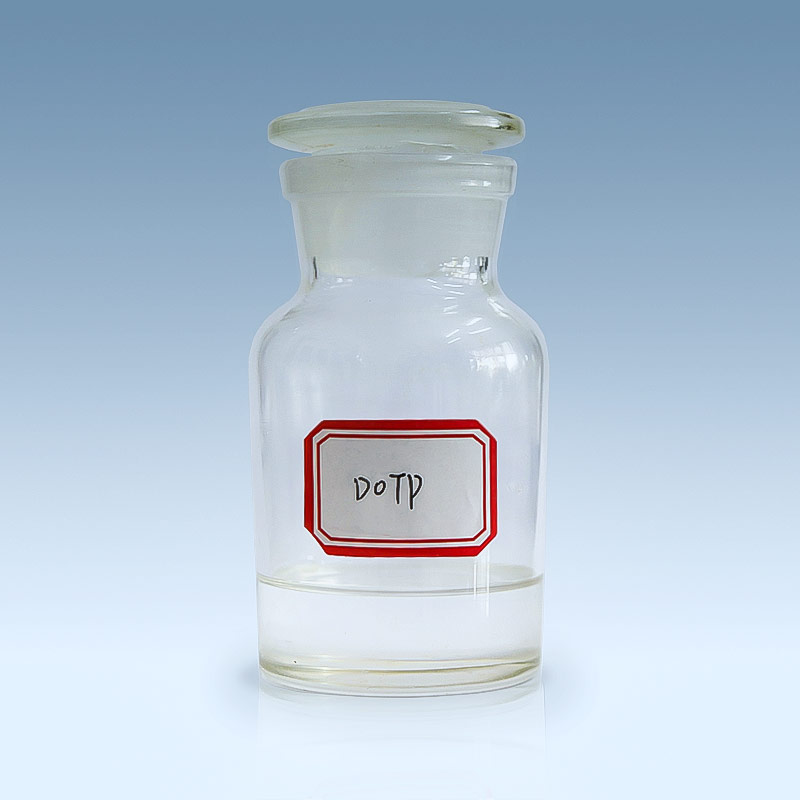 DOTP Plasticizer for PVC Cable and Plastisol ApplicationsCheck DOTP specifications and bulk handling details before discussing grades, formulations, and storage needs for PVC cable or plastisol use.View Product →
Our DOTP product page gives a starting point for grade and specification discussions. If you need a formulation review, share the target hardness, processing method, and end-use requirements; we can help narrow the shortlist without overcomplicating the project.
How Zhejiang Great Chemical Approaches DOTP Production
Zhejiang Great Chemical Science & Technology Co., Ltd. has been active in the chemical and plasticizer industry since 2008. Our site covers about 125 acres on the north bank of the Qiantang River crossing, roughly 3 km from Jiaxing Port, with access to several expressways. That location supports domestic delivery and export shipments. We are a plasticizer industry chain enterprise, and our team includes more than 180 employees, including technical specialists and management staff.
Our product range includes DOTP, DOP, DINP, DOA, DPHP, TOTM, and phthalic anhydride. Public company information describes a combined DOP, DINP, and DOTP operation with annual DOTP capacity of 180,000 tonnes, alongside DOP and DINP lines. We also state that our products meet national high-grade standards and that our environmental plasticizers are designed to meet EU standards. Buyers should always confirm the current grade, certification package, and available capacity for their specific delivery window.
What we try to bring to a DOTP conversation is not a hard sell but practical experience: how the material behaves in a mixer, what to watch during fusion, how storage affects handling, and why two suppliers can quote the same specification but deliver different production results. If you are evaluating DOTP, we are happy to compare notes and help you build a specification that works in the plant, not just on paper.
DOTP has earned its place because it solves real problems for flexible PVC producers: good plasticizing performance, low volatility, strong heat aging, and a non-ortho-phthalate positioning that fits many modern regulatory programs. It is not right for every compound, and it should never be selected on price alone. But when the application calls for a versatile terephthalate plasticizer, DOTP deserves a careful look.
If you are comparing DOTP with DOP, DINP, or another plasticizer, start with the end use and work backward. Define the hardness, heat exposure, regulatory market, and processing method. Then ask for samples, data, and an honest discussion of trade-offs. That is the approach we take at Zhejiang Great Chemical, and it is usually the fastest route to a compound that performs consistently in production.