

 English
 中文简体
中文简体Content
What Is DOTP Plasticizer?
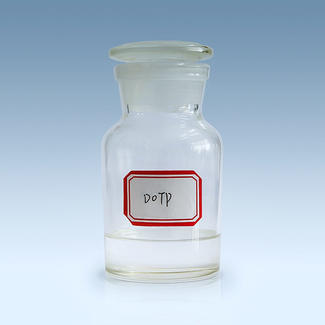
DOTP plasticizer, short for dioctyl terephthalate (also written as di(2-ethylhexyl) terephthalate or DEHT), is a high-molecular-weight ester plasticizer derived from terephthalic acid and 2-ethylhexanol. It belongs to the terephthalate family of plasticizers and is widely used as a primary plasticizer for polyvinyl chloride (PVC) and other polymer systems. Its core function is to insert itself between polymer chains, increasing their mobility, reducing brittleness, and improving the flexibility, workability, and durability of the final plastic product.
What sets DOTP apart from older-generation plasticizers is its structural isomerism relative to DEHP (di(2-ethylhexyl) phthalate). Both share the same molecular formula and similar molecular weight, but their acid components differ — DOTP uses terephthalic acid (with para-positioned ester groups) while DEHP uses phthalic acid (with ortho-positioned ester groups). This seemingly small structural difference translates into significantly better regulatory standing, lower migration tendency, and improved high-temperature performance for DOTP, making it one of the most commercially important non-phthalate plasticizers on the market today.
Key Chemical and Physical Properties of DOTP
Understanding the technical profile of dioctyl terephthalate is essential for formulators deciding whether it suits a specific application. The following table summarizes its core physical and chemical properties.
| Property | Value / Description |
| Chemical name | Di(2-ethylhexyl) terephthalate |
| CAS number | 6422-86-2 |
| Molecular formula | C₂₄H₃₈O₄ |
| Molecular weight | 390.56 g/mol |
| Appearance | Clear, colorless to pale yellow oily liquid |
| Density | ~0.984 g/cm³ at 20°C |
| Boiling point | ~400°C at atmospheric pressure |
| Flash point | ~232°C (closed cup) |
| Viscosity | ~60–80 mPa·s at 20°C |
| Water solubility | Practically insoluble (<0.01 g/L at 25°C) |
| Vapor pressure | Very low (<0.001 mmHg at 20°C) |
The low vapor pressure and high boiling point of DOTP are particularly important from a performance standpoint. They mean DOTP volatilizes very slowly even at elevated processing and service temperatures, which directly translates to lower plasticizer loss during PVC compounding, extrusion, and calendering — and longer service life in the finished product.
DOTP vs. DEHP: Why the Industry Is Switching
For decades, DEHP was the dominant plasticizer in PVC applications globally. It was cheap, effective, and compatible with a wide range of polymers. However, DEHP was classified as a substance of very high concern (SVHC) under the EU's REACH regulation due to its reproductive toxicity, and it has been subject to restrictions or outright bans across the EU, UK, and several other jurisdictions. DOTP emerged as the most technically comparable drop-in replacement, and the comparison between the two remains the most important context for any buyer evaluating a terephthalate plasticizer.
Regulatory Status
DEHP is listed on the REACH Authorization List (Annex XIV) and requires authorization for use in the EU. It is restricted in toys, childcare articles, and medical devices across multiple regulatory frameworks. DOTP, by contrast, carries no SVHC classification under REACH as of current listings, is not classified as a reproductive toxicant, and has received positive evaluations from regulatory bodies in the EU, US (EPA), and Asia. This regulatory divergence is the primary commercial driver behind the shift from DEHP to DOTP in sensitive application segments.
Performance Comparison
In most PVC applications, DOTP performs comparably to DEHP with some notable advantages and a few trade-offs. DOTP shows lower volatility and better heat stability than DEHP, which makes it preferable for applications involving prolonged high-temperature exposure such as automotive interior cables and industrial flooring. DOTP also demonstrates lower migration from PVC compounds, which is critical for food contact materials and medical applications. The primary trade-off is plasticizing efficiency — DOTP typically requires slightly higher loading levels (around 3–5% more by weight) than DEHP to achieve equivalent softness, which adds modest cost. Its gelation temperature with PVC is also slightly higher, which may require minor processing adjustments during compounding.
| Attribute | DOTP | DEHP |
| Regulatory status (EU) | No SVHC listing | SVHC / Authorization required |
| Reproductive toxicity | Not classified | Cat. 1B Repr. toxicant |
| Plasticizing efficiency | Slightly lower | Higher |
| Volatility / Fogging | Lower (better) | Higher |
| Heat stability | Better | Good |
| Migration resistance | Better | Moderate |
| Cold flexibility | Slightly inferior | Better |
| Cost | Slightly higher | Lower |
Main Applications of DOTP Plasticizer
DOTP is used across a broad range of industries and end-product categories. Its combination of regulatory compliance, low migration, and thermal stability makes it particularly well-suited to demanding applications where DEHP is no longer acceptable or desirable.
Wire and Cable Insulation
One of the largest volume applications for dioctyl terephthalate is flexible PVC insulation and jacketing for electrical cables. Cables in automotive, construction, and industrial settings are frequently exposed to elevated temperatures, oils, and UV radiation over their service life. DOTP's low volatility ensures the PVC compound retains flexibility for longer without plasticizer loss — a critical safety and compliance requirement for cables rated to 90°C or higher operating temperatures. Many major automotive OEMs and cable manufacturers have mandated the switch to DOTP or equivalent non-phthalate plasticizers in their supply chain specifications.
Flooring and Wall Coverings
Flexible PVC flooring — including luxury vinyl tile (LVT), sheet vinyl, and vinyl composition tile — represents another major application segment. Flooring is a long-service-life product that must maintain flexibility and dimensional stability over decades under foot traffic, furniture loads, temperature cycling, and cleaning chemical exposure. DOTP's superior migration resistance means less plasticizer leaches out over time, preventing the surface hardening, cracking, and tackiness that can occur with more migratory plasticizers. This is also relevant for vinyl wall coverings in commercial and healthcare settings, where durability and low emission profiles are specified.
Medical and Healthcare Products
DEHP has long been used in medical-grade PVC for blood bags, IV tubing, and medical device components. However, concern about DEHP migration into blood and other body fluids — particularly for neonates and patients undergoing prolonged treatment — has driven the medical industry toward alternatives including DOTP. DOTP-plasticized PVC compounds are now used in a range of medical applications where the non-phthalate status and lower migration profile provide a regulatory and safety advantage. Medical-grade DOTP must meet stringent purity specifications and pharmacopoeia standards, and sourcing from a supplier with documented medical-grade certification is essential for this application.
Automotive Interior Components
Automotive interiors present one of the most demanding plasticizer environments — sustained high temperatures inside a closed vehicle cabin, UV exposure through glass, and the need to pass strict fogging tests (typically VDA 278 or DIN 75201) that measure how much plasticizer volatilizes and deposits on interior glass surfaces. DOTP consistently outperforms DEHP in fogging tests due to its lower vapor pressure, which is why it has been adopted in dashboards, door panels, seat coverings, and underhood cable applications by tier-one automotive suppliers and OEM programs globally.
Toys, Childcare Articles, and Consumer Goods
EU Directive 2005/84/EC and equivalent regulations in the US (CPSIA) restrict DEHP, DBP, and BBP in toys and childcare articles to 0.1% maximum concentration. DOTP is not subject to these restrictions and is widely used in soft PVC toys, bath toys, inflatable products, and flexible consumer goods targeting children. For brands selling into multiple regulated markets, using DOTP simplifies compliance management compared to navigating the varying restriction schedules for different phthalate plasticizers.
How to Use DOTP in PVC Formulations
Formulators switching from DEHP to DOTP or developing new DOTP-based PVC compounds should be aware of several practical considerations that influence processing behavior and final product performance.
- Loading levels: DOTP typically requires 5–10 phr (parts per hundred resin) more than DEHP to achieve equivalent Shore A hardness in a flexible PVC compound. Adjust formulations accordingly and verify mechanical properties by testing rather than assuming a 1:1 substitution ratio.
- Gelation temperature: DOTP has a higher gelation onset temperature with PVC than DEHP. Plastisol formulations may require slightly elevated fusion temperatures or longer dwell times. Check fusion curves on your specific PVC resin before committing to a production formulation.
- Viscosity effects: DOTP has a somewhat higher viscosity than DEHP at room temperature. Plastisol viscosity will be affected, which may influence knife-over-roll coating weights, spray application behavior, or mold filling in slush molding. Rheology adjustment using viscosity depressants or diluents may be needed.
- Cold temperature performance: DOTP has a slightly higher glass transition contribution to PVC compounds than DEHP, meaning cold flexibility may be marginally reduced. For applications requiring certification to low-temperature flexibility standards (e.g., cable cold bend at -40°C), testing and possible co-plasticizer use — such as DINP or a secondary low-temperature plasticizer — is advisable.
- Compatibility with stabilizers and fillers: DOTP is broadly compatible with standard PVC heat stabilizer systems (calcium-zinc, organotin) and common fillers such as calcium carbonate. No significant incompatibility issues are widely reported, but always run small-scale compatibility trials when introducing DOTP into an existing compound formulation for the first time.
- Storage and handling: Store DOTP in sealed, dry containers away from direct sunlight and heat sources. Recommended storage temperature is below 40°C. Shelf life under proper storage conditions is typically 24 months. DOTP has a relatively low odor and low skin sensitization risk, but standard chemical handling PPE — gloves and eye protection — should be used during processing.
Regulatory and Safety Overview for DOTP
A clear understanding of the current regulatory and toxicological status of DOTP is essential for procurement teams, formulators, and compliance managers sourcing a non-phthalate plasticizer for regulated applications.
REACH and European Regulatory Status
DOTP is registered under REACH and is not currently listed on the SVHC Candidate List or the Authorization List (Annex XIV). It is not classified as a reproductive toxicant, endocrine disruptor, carcinogen, or mutagen under CLP Regulation (EC) No 1272/2008 based on current available data. This makes DOTP one of the most straightforwardly compliant primary plasticizers for use in the EU market, including in applications covered by REACH downstream user obligations.
US EPA and Global Regulatory Standing
In the United States, the EPA conducted a risk evaluation of DOTP under the Toxic Substances Control Act (TSCA) and concluded that DOTP does not present an unreasonable risk to human health or the environment. It is not subject to the same CPSIA restrictions as DEHP, DBP, and BBP in children's products. In Asia, DOTP has received favorable regulatory assessments in Japan (under CSCL) and South Korea (K-REACH), supporting its use in export-oriented manufacturing supply chains that must comply with multiple regional regulatory frameworks simultaneously.
Food Contact and Medical Compliance
For food contact applications, DOTP is listed in EU Regulation 10/2011 on plastic materials in contact with food, with specific migration limits applicable. In the US, it appears in FDA regulations (21 CFR) as an approved substance for specific food contact uses. For medical applications, compliance with ISO 10993 biocompatibility standards and relevant pharmacopoeia requirements must be established on a product-by-product basis using medical-grade DOTP from a qualified, auditable supply source.
What to Look for When Sourcing DOTP Plasticizer
Purchasing dioctyl terephthalate for industrial or specialty applications requires attention to product quality, supply chain reliability, and documentation. Not all commercially available DOTP is equivalent — purity, color, and trace impurity profiles vary between producers and grades.
- Purity specification: Standard industrial-grade DOTP typically has a purity of ≥99.0% by GC. For medical or food contact applications, request higher purity grades with documented heavy metal content, acid value, and color (APHA) test results per batch.
- Certificate of Analysis (CoA): Always request a batch-specific CoA that includes purity, density, viscosity, acid value, color, water content, and flash point. Verify that results fall within the supplier's stated specification limits.
- REACH registration documentation: Request a copy of the supplier's REACH registration confirmation and up-to-date Safety Data Sheet (SDS) in the appropriate language for your market. Confirm the SDS reflects the current CLP classification.
- Supply chain transparency: Know whether you are purchasing directly from a manufacturer or through a distributor, and confirm the origin of the product. Major producers of DOTP include BASF, Eastman, and several large Asian manufacturers. Traceability matters for supply chain compliance audits.
- Packaging and logistics: DOTP is typically supplied in bulk (ISO tank or road tanker), intermediate bulk containers (IBCs of 1,000L), or 200L steel drums. Confirm packaging compatibility with your receiving and storage infrastructure, and ensure transport documents comply with applicable ADR/IMDG classifications for your logistics route.