

 English
 中文简体
中文简体TOTM plasticizer, short for trioctyl trimellitate, is a high-performance additive that makes rigid plastics flexible and workable. If you've ever wondered how PVC materials can withstand extreme temperatures while remaining soft and pliable, TOTM is often the answer. This specialized plasticizer has become indispensable in industries ranging from automotive manufacturing to medical devices, where ordinary plasticizers simply can't deliver the performance needed for demanding applications.
Content
- 1 Understanding What TOTM Plasticizer Actually Is
- 2 Key Properties That Set TOTM Apart
- 3 Primary Applications and Industries
- 4 Comparing TOTM to Other Common Plasticizers
- 5 Processing and Formulation Guidelines
- 6 Health, Safety, and Regulatory Considerations
- 7 Performance Testing and Quality Control
- 8 Cost Considerations and Value Proposition
- 9 Common Challenges and Solutions
- 10 Future Trends and Market Outlook
Understanding What TOTM Plasticizer Actually Is
TOTM plasticizer belongs to the trimellitate family of plasticizers, which are known for their exceptional heat stability and low volatility. The chemical name trioctyl trimellitate describes its molecular structure, consisting of trimellitic acid esterified with 2-ethylhexanol. This might sound complicated, but what matters is how this structure translates into practical benefits for manufacturers and end users.
Unlike many common plasticizers that break down or evaporate at elevated temperatures, TOTM maintains its properties even when exposed to continuous heat. The molecular weight and chemical bonds in TOTM create a stable compound that resists migration out of the plastic matrix. This permanence is crucial for applications where the plastic product must maintain flexibility and performance over many years of use in harsh conditions.
The plasticizer works by embedding itself between polymer chains in materials like PVC, acting as a molecular lubricant that allows the chains to slide past each other more easily. This internal lubrication is what transforms rigid, brittle PVC into the soft, flexible material we see in countless products. The key difference with TOTM is that it stays put even when things get hot, unlike cheaper alternatives that can sweat out or evaporate.
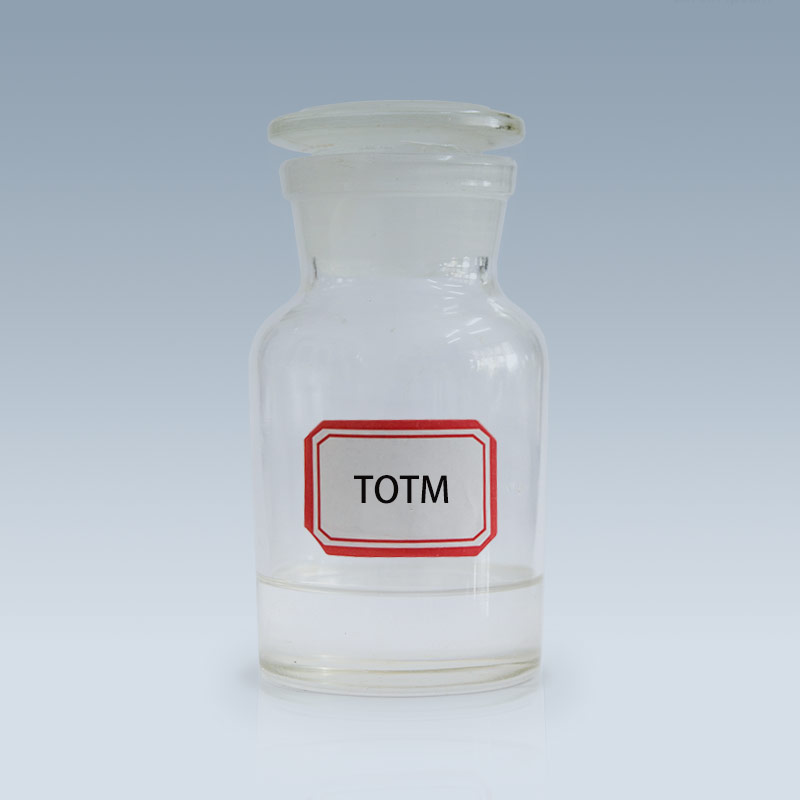
TOTM appears as a clear to pale yellow liquid with very low odor, making it suitable for applications where smell would be problematic. Its viscosity falls in a range that makes it easy to blend with polymer resins during manufacturing, while its compatibility with PVC and other polymers ensures uniform distribution throughout the final product.
Key Properties That Set TOTM Apart
The performance characteristics of TOTM plasticizer explain why manufacturers are willing to pay a premium over conventional plasticizers. Understanding these properties helps you determine whether TOTM is the right choice for your specific application.
Exceptional Heat Resistance
TOTM's claim to fame is its outstanding thermal stability. While standard plasticizers like DOP (dioctyl phthalate) start breaking down around 150°F to 180°F, TOTM remains stable at temperatures exceeding 300°F. This heat resistance makes it irreplaceable in applications like automotive under-hood components, where temperatures routinely reach 250°F or higher. Wire and cable insulation that must survive industrial ovens or high-temperature processing also relies heavily on TOTM's thermal capabilities.
Low Volatility and Migration
The large molecular size of TOTM prevents it from easily evaporating or migrating out of plasticized materials. This low volatility means products maintain their flexibility over time rather than becoming stiff and brittle as the plasticizer escapes. In automotive interiors, this prevents that sticky film that sometimes forms on windshields from cheaper plasticizers volatilizing. For medical devices, low migration ensures the plasticizer doesn't leach into bodily fluids or medications.
Excellent Low-Temperature Flexibility
Despite being a high-temperature specialist, TOTM also performs admirably in cold conditions. Products plasticized with TOTM remain flexible down to -40°F or lower, depending on the plasticizer loading. This wide temperature range from extreme cold to extreme heat makes TOTM ideal for products that experience varying climate conditions, such as outdoor cables or automotive components that must function in both desert summers and arctic winters.
Chemical and Oil Resistance
TOTM plasticizer demonstrates superior resistance to extraction by oils, fuels, and many chemicals compared to phthalate plasticizers. When PVC materials come into contact with petroleum products, motor oils, or hydraulic fluids, TOTM is less likely to be leached out. This resistance preserves the material's flexibility and physical properties even after prolonged exposure to harsh chemicals.
Primary Applications and Industries
TOTM plasticizer serves critical functions across multiple industries where performance cannot be compromised. Its unique properties make it the go-to choice for applications that would destroy products made with conventional plasticizers.
| Industry | Typical Applications | Why TOTM Is Essential |
| Automotive | Under-hood wiring, gaskets, hoses, interior trim | Withstands engine heat and fuel/oil exposure |
| Wire & Cable | High-temperature wire insulation, industrial cables | Prevents insulation failure in hot environments |
| Medical | Blood bags, IV tubing, medical device housings | Non-toxic, low extraction, biocompatible |
| Industrial | Conveyor belts, gaskets, industrial hoses | Survives process heat and chemical exposure |
| Food Contact | Food processing equipment, packaging films | FDA compliant, minimal migration into food |
| Aerospace | Wire insulation, seals, flexible components | Extreme temperature range, low outgassing |
The automotive industry represents one of the largest consumers of TOTM plasticizer. Modern vehicles contain miles of wiring, much of it routed near hot engine components or through the engine compartment. Standard PVC insulation would harden and crack within months under these conditions, but TOTM-plasticized wire maintains flexibility for the vehicle's lifetime. Interior components like door panels and dashboard coverings also benefit from TOTM's low volatility, preventing that unpleasant film on windshields that occurs when plasticizers evaporate.
Medical applications demand the highest purity and safety standards, which TOTM meets with appropriate grades. Blood storage bags must remain flexible during refrigeration while being compatible with blood chemistry. TOTM's low extraction characteristics mean minimal plasticizer leaching into stored blood or IV solutions. The material also withstands sterilization processes including gamma radiation and steam sterilization without degrading.
Comparing TOTM to Other Common Plasticizers
Understanding how TOTM stacks up against alternative plasticizers helps manufacturers make informed material selection decisions. Each plasticizer type offers different advantages and limitations that suit specific applications.
DOP (dioctyl phthalate) and DINP (diisononyl phthalate) are the most common general-purpose plasticizers, offering good performance at economical prices. They work perfectly well for applications like flooring, wall coverings, and consumer products that don't face extreme conditions. However, they fall short in high-temperature environments where TOTM excels. Phthalate plasticizers also face increasing regulatory scrutiny in some regions, particularly for children's products and medical applications.
DOTP (dioctyl terephthalate), also called DEHT, has emerged as a non-phthalate alternative to DOP with improved heat stability. It bridges the gap between standard phthalates and premium plasticizers like TOTM, offering better thermal performance than DOP at a lower cost than TOTM. For applications requiring moderate heat resistance without TOTM's extreme capabilities, DOTP presents an economical middle ground.
DINCH (diisononyl cyclohexane-1,2-dicarboxylate) represents another non-phthalate option gaining popularity, especially in sensitive applications. It offers excellent toxicological profile and good general performance but doesn't match TOTM's high-temperature capabilities. Medical device manufacturers sometimes choose between DINCH for room-temperature applications and TOTM when heat resistance is required.
The trimellitate family includes TOTM's cousin TINTM (triisononyl trimellitate), which offers similar high-temperature performance with slightly different processing characteristics. Some manufacturers prefer TINTM for specific applications, though TOTM remains more widely used and specified in industry standards.
Processing and Formulation Guidelines
Successfully incorporating TOTM plasticizer into PVC compounds requires attention to formulation details and processing parameters. These guidelines help ensure optimal performance in the final product.
Typical loading levels for TOTM range from 30 to 70 parts per hundred resin (phr), depending on the desired flexibility and application requirements. Lower loadings around 30-40 phr produce semi-rigid products suitable for applications needing dimensional stability with some flexibility. Higher loadings of 50-70 phr create very flexible materials for applications like wire insulation or soft tubing. Going above 70 phr generally provides diminishing returns and can cause issues with mechanical properties and plasticizer migration.
- Mix TOTM thoroughly with PVC resin and other additives using high-shear mixing equipment to ensure uniform distribution throughout the compound
- Processing temperatures typically range from 320°F to 380°F depending on the specific PVC grade and desired properties
- Allow adequate fusion time during processing to ensure complete gelation and optimal physical properties
- Combine TOTM with heat stabilizers appropriate for high-temperature applications, such as tin or calcium-zinc stabilizer systems
- Consider adding antioxidants when the final product will experience prolonged high-temperature exposure to maximize service life
- Maintain consistent processing conditions to achieve reproducible properties batch after batch
TOTM can be blended with other plasticizers to achieve specific performance targets or optimize costs. Common blends include TOTM with DOTP to balance high-temperature performance against cost, or TOTM with polymeric plasticizers to enhance permanence. When blending, ensure the plasticizers are compatible and that the blend meets all performance requirements for the application.
Storage and handling of TOTM requires basic precautions. Store in closed containers away from extreme heat and direct sunlight to prevent degradation. While TOTM has low volatility, storage areas should still have adequate ventilation. The material is not classified as hazardous under most regulations, but normal industrial hygiene practices should be followed including wearing appropriate protective equipment during handling.
Health, Safety, and Regulatory Considerations
Safety and regulatory compliance are paramount concerns when selecting plasticizers, particularly as regulations evolve globally. TOTM's regulatory status and toxicological profile make it acceptable for many sensitive applications where other plasticizers face restrictions.
TOTM is not classified as a phthalate plasticizer, which gives it significant regulatory advantages in regions restricting phthalate use. The European Union's REACH regulation and various phthalate restrictions don't apply to TOTM, allowing its continued use in applications where phthalates are prohibited or restricted. This non-phthalate status has made TOTM increasingly popular as manufacturers seek to reformulate products away from regulated phthalates.
For medical applications, TOTM grades are available that meet USP Class VI requirements and ISO 10993 biocompatibility standards. These medical-grade materials undergo extensive testing for cytotoxicity, sensitization, and irritation to ensure patient safety. FDA approvals exist for TOTM use in specific food contact applications and medical devices, though manufacturers must verify their specific formulations meet applicable regulations.
Toxicological studies on TOTM indicate low acute toxicity with LD50 values exceeding 30,000 mg/kg in animal studies. The material shows no evidence of mutagenicity or carcinogenicity in standard testing protocols. Reproductive and developmental toxicity studies have not identified concerns at exposure levels typical for consumer or industrial use. These favorable toxicological characteristics contribute to TOTM's acceptance in regulated applications.
Workplace safety measures for TOTM handling are straightforward. The material has low vapor pressure, minimizing inhalation exposure risk during normal handling. Skin contact should be avoided as with any industrial chemical, and contaminated clothing should be removed and washed before reuse. Eye contact requires immediate flushing with water, though TOTM is not classified as a severe eye irritant. Safety data sheets provide complete handling and emergency response information.
Performance Testing and Quality Control
Verifying that TOTM-plasticized products meet performance specifications requires systematic testing throughout development and production. These quality control measures ensure consistent results and long-term reliability.
Heat aging tests simulate long-term exposure to elevated temperatures by accelerating the aging process. Samples are placed in ovens at temperatures exceeding expected service conditions for extended periods, then evaluated for changes in physical properties. TOTM-plasticized materials should maintain flexibility, tensile strength, and elongation much better than materials plasticized with less stable alternatives. Standard test methods like ASTM D573 provide protocols for heat aging evaluation.
Volatility testing measures how much plasticizer evaporates under specific conditions. Methods like ASTM D1203 quantify weight loss after exposure to elevated temperatures for defined periods. TOTM consistently shows lower volatility than phthalate plasticizers, with typical weight loss under 1% after 24 hours at 212°F compared to 3-5% for DOP under identical conditions.
Extraction resistance testing evaluates how well plasticizers resist leaching when exposed to solvents, oils, or aqueous solutions. These tests are particularly important for automotive applications exposed to fuels and lubricants, or medical applications in contact with bodily fluids. TOTM demonstrates superior extraction resistance compared to most alternatives, maintaining material properties even after prolonged exposure to aggressive solvents.
Low-temperature brittleness testing determines the coldest temperature at which materials remain flexible. The cold bend test or Gehman test evaluates stiffness at various temperatures below freezing. TOTM-plasticized compounds typically remain flexible to -40°F or lower, making them suitable for outdoor and cold-climate applications.
Cost Considerations and Value Proposition
TOTM plasticizer commands premium pricing compared to commodity plasticizers, but understanding the total cost of ownership reveals when the investment makes financial sense. Smart material selection balances upfront costs against long-term performance and potential failure costs.
Current TOTM pricing typically runs two to four times higher than general-purpose phthalate plasticizers like DOP or DINP, depending on crude oil prices, supply-demand dynamics, and purchase volumes. This price differential causes many manufacturers to reserve TOTM for applications where its unique properties are truly necessary rather than using it universally.
The value proposition becomes clear when you consider application-specific requirements. An automotive manufacturer choosing between plasticizers for under-hood wiring insulation must weigh TOTM's higher material cost against the catastrophic expense of warranty claims from wire insulation failures. A single vehicle fire caused by failed insulation could cost more than the plasticizer savings on thousands of vehicles. In this context, TOTM's premium becomes inexpensive insurance.
Product lifespan extension represents another value factor. Products plasticized with TOTM often last significantly longer than those using conventional plasticizers, particularly in harsh environments. Industrial hoses, conveyor belts, and outdoor cables that might require replacement every three years with standard plasticizers can last six to ten years with TOTM. The reduced replacement frequency, downtime, and labor costs can far exceed the initial material cost difference.
Regulatory compliance costs also factor into the equation. Reformulating products to eliminate restricted phthalates requires significant engineering resources, testing, and potential re-certification costs. Choosing TOTM from the outset avoids these transition costs and reduces regulatory risk as phthalate restrictions continue expanding globally.
Common Challenges and Solutions
Working with TOTM plasticizer presents some unique challenges that can be overcome with proper techniques and understanding. Anticipating these issues prevents production problems and ensures optimal product performance.
Higher viscosity compared to phthalate plasticizers can make TOTM more difficult to pump and meter in automated systems. The material flows more slowly, potentially causing dosing accuracy issues or requiring heating to reduce viscosity. Solutions include installing heated storage tanks and feed lines to maintain TOTM at 100-120°F during processing, which significantly reduces viscosity without degrading the material.
Compatibility issues occasionally arise when formulators attempt to substitute TOTM directly for phthalate plasticizers without adjusting other recipe components. TOTM interacts differently with stabilizers, fillers, and other additives than phthalates do. Successful conversion requires rebalancing the entire formulation, not just swapping plasticizers. Working with technical support from your TOTM supplier helps identify necessary adjustments.
Initial hardness of TOTM-plasticized compounds may exceed that of phthalate-plasticized equivalents at the same loading level. TOTM is a less efficient plasticizer on a parts-per-hundred basis, meaning you might need 5-10% more TOTM to achieve the same flexibility as DOP. While this increases material cost, the performance benefits in demanding applications justify the additional investment.
Color stability can present challenges in light-colored or white products. Some TOTM grades may impart slight yellowish tint or can yellow over time when exposed to heat and light. Selecting high-purity TOTM grades and incorporating appropriate stabilizer packages minimizes discoloration. UV absorbers and antioxidants help maintain color stability in outdoor applications or products exposed to strong lighting.
Future Trends and Market Outlook
The TOTM plasticizer market continues evolving as regulatory pressures, technological advances, and changing industry needs reshape demand patterns. Understanding these trends helps manufacturers plan for future material requirements and potential alternatives.
Increasing electrification in automotive applications is driving TOTM demand higher. Electric vehicles contain significantly more wiring than conventional vehicles, and much of this wiring operates at elevated temperatures from battery systems and power electronics. TOTM's combination of heat resistance and electrical insulation properties makes it ideal for EV applications, positioning it for strong growth as vehicle electrification accelerates.
Bio-based and sustainable plasticizer development represents an emerging trend, though bio-based trimellitates remain primarily in research stages. Several companies are investigating renewable feedstocks for plasticizer production to reduce dependence on petroleum derivatives and improve sustainability profiles. While petroleum-based TOTM will dominate for the foreseeable future, bio-based alternatives may eventually supplement or partially replace conventional production.
Regulatory evolution continues pushing markets toward non-phthalate plasticizers, benefiting TOTM and other alternatives. As regions worldwide implement or expand phthalate restrictions, manufacturers increasingly specify TOTM for applications previously using phthalate plasticizers. This regulatory tailwind supports steady TOTM demand growth even in mature markets.
Technical innovations in production processes are improving TOTM quality while potentially reducing costs. New catalysts and process optimization yield purer products with enhanced color and odor characteristics. These improvements expand TOTM's application range into areas previously dominated by other plasticizer types.
Supply chain considerations have become more prominent as manufacturers seek to diversify sourcing and ensure material availability. Recent global disruptions highlighted vulnerabilities in single-source supply chains. Companies are increasingly qualifying multiple TOTM suppliers and maintaining strategic inventories to prevent production interruptions from supply disruptions.