

 English
 中文简体
中文简体Content
What Dioctyl Adipate Actually Is
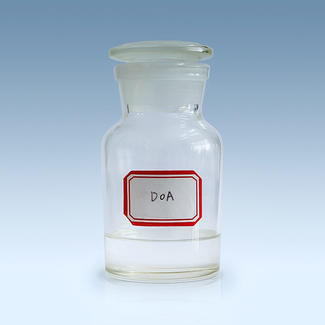
Dioctyl adipate — commonly abbreviated as DOA — is a synthetic ester compound used primarily as a plasticizer, meaning it's added to polymers to make them softer, more flexible, and easier to process. Its full chemical name is bis(2-ethylhexyl) adipate, and it's also referred to as DEHA (di(2-ethylhexyl) adipate) in many technical and regulatory documents. The CAS number is 103-23-1, which you'll see listed on safety data sheets and product specifications.
Chemically, DOA is the diester of adipic acid and 2-ethylhexanol. It presents as a clear, oily liquid with a faint, mild odor at room temperature. It has low volatility, good thermal stability, and — critically — exceptional performance at low temperatures, which is the characteristic that sets it apart from the most common plasticizer alternatives in several key applications.
While dioctyl adipate is not a household name, it's present in a surprising range of everyday products: flexible food packaging films, medical tubing, automotive interior components, synthetic leather, and cold-weather wire insulation all commonly use DOA or its close analogs as part of their formulation.
Key Physical and Chemical Properties of DOA
Understanding the physical and chemical profile of dioctyl adipate is essential for anyone working with it in formulation or processing. Here are the most important properties:
| Property | Value / Description |
| Chemical Formula | C₂₂H₄₂O₄ |
| Molecular Weight | 370.57 g/mol |
| Appearance | Clear, colorless to pale yellow oily liquid |
| Boiling Point | ~214°C at 5 mmHg |
| Pour Point / Glass Transition | Effective down to approximately -70°C in PVC |
| Density | ~0.927 g/cm³ at 20°C |
| Viscosity | ~12–14 mPa·s at 25°C |
| Solubility in Water | Practically insoluble (<0.1 g/L) |
| Flash Point | ~196°C (closed cup) |
| CAS Number | 103-23-1 |
The most noteworthy property in that table is the effective low-temperature performance. While common plasticizers like DEHP (dioctyl phthalate) become increasingly brittle in cold environments, DOA maintains flexibility at temperatures well below -50°C. This makes it indispensable in formulations where cold-weather performance is non-negotiable. Its low water solubility also means it doesn't leach readily when in contact with aqueous environments, which is a key consideration for food contact and medical applications.
How DOA Functions as a Plasticizer
To understand why dioctyl adipate works so well, it helps to understand what a plasticizer actually does at the molecular level. Polymers like PVC in their pure form are rigid because their long molecular chains are tightly packed and interact strongly with one another. A plasticizer works by inserting itself between these polymer chains, reducing the intermolecular forces and increasing the free volume available for chain movement. The result is a material that bends, stretches, and deforms without cracking.
DOA's molecular structure — a medium-length aliphatic chain derived from adipic acid — makes it particularly effective at this job in cold conditions. The ester molecule is polar enough to be compatible with polar polymers like PVC, but its aliphatic backbone is flexible and resistant to stiffening at low temperatures. This contrasts with phthalate-based plasticizers, which have an aromatic ring in their backbone that becomes more rigid as temperature drops.
In practice, DOA is most often used as a secondary plasticizer — meaning it's blended with a primary plasticizer (most commonly DINP, DOTP, or DOP/DEHP) rather than used alone. Used at 10–30% of the total plasticizer loading, DOA imparts cold-temperature flexibility to the compound while the primary plasticizer handles the bulk of the softening work and provides better permanence and lower volatility in the blend.
Major Industrial Applications of Dioctyl Adipate
The bis(2-ethylhexyl) adipate plasticizer is used across a wide range of industries wherever flexibility at low temperatures, low toxicity, or food contact compliance is required. Here are the main application areas in detail:
Food Packaging Films and Wraps
This is one of DOA's most well-known applications. PVC cling film used for food wrapping — whether in commercial food processing or retail food packaging — requires a plasticizer that is approved for food contact, migrates minimally into food, and keeps the film pliable at refrigerator and freezer temperatures. DOA meets all three criteria. It has been approved for food contact use by the U.S. FDA under 21 CFR 181.27 and 182.90 (subject to certain migration limits), and it is widely accepted under EU food contact regulations. Cold chain performance is particularly critical here: food wrap that stiffens and tears in a walk-in freezer is completely unusable.
Wire and Cable Insulation
Electrical wiring used in outdoor, automotive, aerospace, and military applications is exposed to a wide temperature range. Standard PVC insulation plasticized with phthalates alone can become brittle and crack in sub-zero conditions, creating a risk of insulation failure and short circuits. DOA is blended into PVC cable compounds to ensure the insulation remains flexible and impact-resistant in harsh winter conditions or high-altitude cold environments. Military-specification wire and aviation-grade cables frequently call for DOA-containing PVC formulations precisely for this reason.
Medical Devices and Tubing
The medical plastics industry has been moving away from DEHP (di(2-ethylhexyl) phthalate) due to regulatory pressure over its endocrine-disrupting potential. DOA and related adipate esters have been evaluated as alternative plasticizers for blood bags, IV tubing, and other medical PVC devices. DOA offers good biocompatibility, low toxicity in standard testing, and reasonable permanence in medical-grade compounds. While it hasn't fully replaced DEHP across all medical applications, it is used in several medical device categories where cold storage or specific biocompatibility requirements favor it.
Automotive Interior Components
Dashboard coverings, door panels, seat upholstery, and floor mats made from PVC or vinyl compounds experience extreme temperature swings in vehicle interiors — from below -30°C in cold climates to above 80°C in direct summer sun. DOA is used in automotive vinyl compounds to ensure parts don't crack when the car is started in winter. It's often used alongside primary plasticizers with better heat and UV stability to create a formulation that performs across the entire temperature range.
Synthetic Leather and Coated Fabrics
PVC-coated fabrics used for upholstery, bags, outerwear, and protective clothing need to remain supple at low temperatures so they don't crack or stiffen in cold weather. DEHA plasticizer is widely used in these coated textile applications, often in combination with other plasticizers, to maintain a leather-like hand feel and crack resistance even in cold storage or outdoor winter use.
DOA vs. Other Common Plasticizers: How Does It Compare?
When formulating a flexible PVC compound, choosing the right plasticizer (or combination) depends on the application's specific performance requirements. Here's how dioctyl adipate stacks up against the most common alternatives:
| Plasticizer | Low-Temp Performance | Volatility | Food Contact Approval | Regulatory Status | Typical Use |
| DOA (Dioctyl Adipate) | Excellent | Moderate | Yes (with limits) | Generally accepted | Secondary plasticizer, food film, wire |
| DEHP (DOP) | Poor | Low | Restricted | SVHC in EU; restricted in many uses | Legacy primary plasticizer |
| DINP | Moderate | Very Low | Limited | Under review in EU | Primary plasticizer, general PVC |
| DOTP (DEHT) | Moderate | Very Low | Yes | Favorable; phthalate-free | DEHP replacement, primary plasticizer |
| DINA (Diisononyl Adipate) | Very Good | Very Low | Yes | Favorable | Premium low-temp applications |
The table makes it clear that DOA occupies a specific niche: outstanding low-temperature performance and food contact acceptability at a moderate price point, but with somewhat higher volatility than the large-molecule phthalate and terephthalate plasticizers. In applications where permanence (resistance to migration and evaporation over time) is the top priority, DOA is often blended with low-volatility primary plasticizers rather than used alone. For applications where cold performance is the single most important factor, diisononyl adipate (DINA) can be considered as a higher-permanence alternative, though at higher cost.